Showing posts with label history of Down syndrome civil rights timeline. Show all posts

Friday, July 26, 2013

A Brief History of Down syndrome - Part 7: Abused, Neglected, Forgotten


"Euthanasia through neglect..."
– Albert Deutsch

As World War II raged on, the number of admissions to institutions continued to increase.  The amount of workers in the institutions continued to decrease however, as more men were being drafted every day for the war effort. Overcrowding quickly became the norm once again, with patients in hallways and even sharing beds. Without privacy, without comfort, without possessions, without support, patients were completely dehumanized and ready targets for abuse.  Conscientious objectors, those citizens who refused to fight in the war for ethical reasons, were readily employed by the institutions to help fill the ranks.  It is these people that began to expose the horrors of mass violence and neglect.
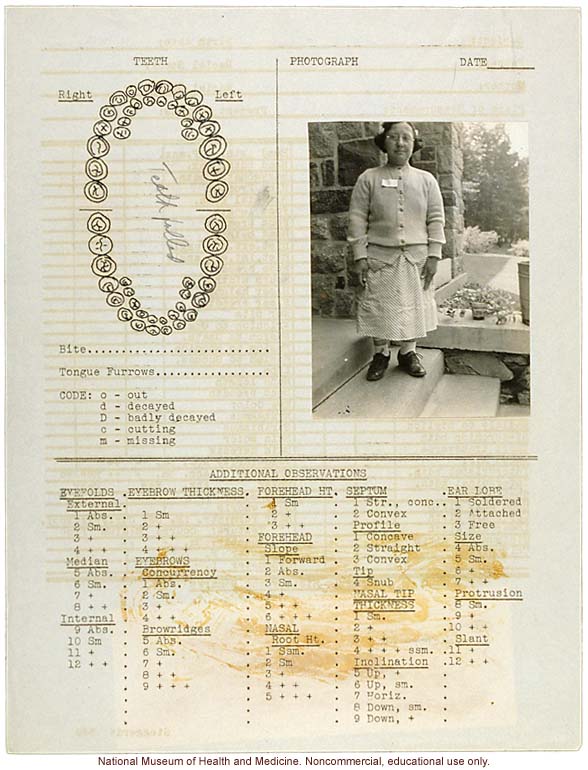

Patient record from Letchworth Villiage.
Photo courtesy of The DNA Learning Center
Those with disabilities were viewed as sick within a system that was highly medicalized;  each institution was run by physicians and staffed by nurses.  In the US, "state hospitals" housed the mentally ill while "state schools" held those with intellectual disabilities.  Areas within both were referred to in terms of "wards" or nursing units. "Patients" had "charts" and attended "therapy" or "programs".  People were referred to by their disabilities, thereby fostering more dependance on the medical establishment.  As feeble-mindedness was "incurable", patients under this system would require complete care as it was due to their "sickness" that people were institutionalized.  At the same time, many cities in the US continued to uphold "Ugly Laws", passed earlier in the century which made being disabled a crime.  This piece from the Chicago Municipal Code, sec. 36034 includes the following ordinance (that was not repealed until 1974):
"No person who is diseased, maimed, mutilated or in any way deformed so as to be an unsightly or disgusting object or improper person to be allowed in or on the public ways or other public places in this city, or shall therein or thereon expose himself to public view, under a penalty of not less than one dollar nor more than fifty dollars for each offense."
"We were greatly heartened by the appearance. It resembled a
college campus." Image courtesy of the Disability History Museum
After the war, doctors continued to urge parents to place their children in institutions.  During this time, having a child or family member with a disability was seen as a burden.  This story from The Rotarian in 1945 clearly displays the thinking of the day where "A Father" outlines the reason for institutionalizing his daughter for a "hopeless brain condition", diagnosed after a stay at a children's centre:
"After two weeks of observation and a brain X ray, the doctors decided that Mary Lou had a hopeless brain condition and recommended that for our own good and the welfare of the two children we place her in an institution."
The "brain x-ray" in this case is probably referring to a common diagnostic technique of the time, Pneumoencephalography, whereby small holes were bored in the skull, the protective cerebral spinal fluid drained from around the brain and replaced with gas, usually room air, oxygen or helium.  An x-ray was then taken.  The procedure was quite painful, caused headaches, nausea, vomiting and delerium that could last months until the body naturally replaced the cerebral spinal fluid. At worst, it could cause brain damage, paralysis and death.

"A Father" felt, if Mary-Lou was kept at home, it would disrupt family life and result in public ridicule and shame;
"If we did [keep her at home], we should have to curtail normal family activities, to make the environment as simple as possible, for, as is typical in such cases, Mary Lou became frantic over the bustle of the simplest household tasks. We knew, too, that we would have to devote the major part of our time to her, leaving her little brother to develop as best he could. We felt that he already had been neglected.

Also, having witnessed the ridicule and ill treatment which residents of our home town turned on the "village half-wit" and his family, we understood what keeping her with us would mean to our family..."
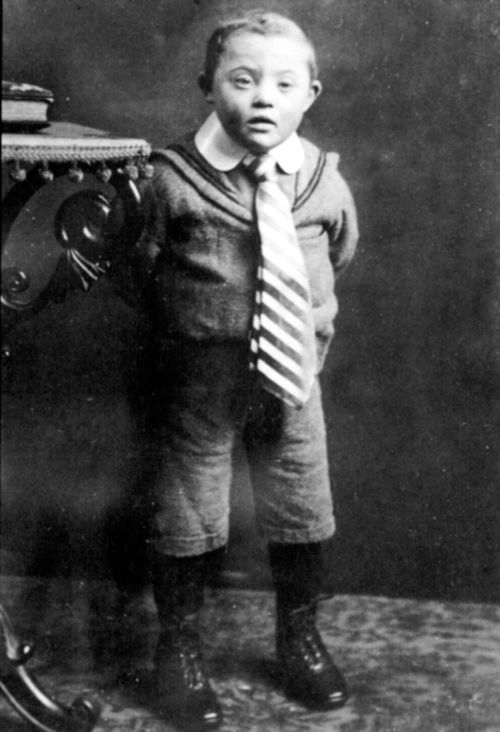
Her admission to a state facility was described as quick and efficient;  the results curative.  The story concludes with "And so tragedy came into a family that barely knew the word. We think, we pray, we have faced it wisely".

Between 1946 and 1967, the number of people with disabilities that were housed in public institutions in America increased from almost 117 000 to over 193 000, a population increase that was almost double that of the general post-war "baby boom".  As time went on, those admitted were becoming younger and their disabilities more pronounced. In regards to Down syndrome in particular, there were many cases where fathers and doctors conspired to have a baby institutionalized and then told the mother that the baby had died.


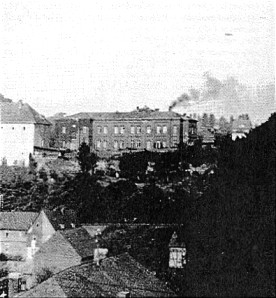
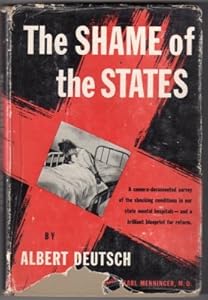
Albert Deutsch, who has been described as "a crusading journalist" wrote The Shame of the States in 1948, a compilation of his serial articles (previously published in major newspapers) which exposed the conditions of Letchworth Village in New York.  At the time, Letchworth was considered to be one of the better institutions in the US, as it had taken great pains in its creation to ensure that the overcrowding and abuses that had occurred in other places would not be repeated there.

Opening in 1911, Letchworth Village was one of the first completely encapsulated "state schools".  It included its own farm, power plant and hospital.  In the words of the first superintendent, Charles S. Little;
..."buildings should not be more than two stories high, nor should they contain more than seventy inmates; that the basements should not be used for purposes other than storage; that the dormitories should be at least two hundred feet apart, with sufficient space for each to have its own playgrounds; that there should be such separation of groups that inmates of one grade could not come in contact with those of another grade; and that in locating the buildings advantage should be taken of the natural beauty of the place."


Photo of Letchworth Village, looking like a college campus.
Patients were divided into separate categories or "grades" and were kept apart:  "moron", "imbecile" and "idiot", the last deemed "untrainable" and therefore initially excluded from admittance to Letchworth as they were unable, in his eyes, "to benefit the state".  As further described by Little:
"...it is a home where the feeble-minded and epileptic of all ages may be given the pleasures and comforts of the ordinary home. To this end our day rooms will be provided with games, colored pictures, flowers, music, etc. Each dormitory will have its own playgrounds where base-ball, football, basket-ball, croquet, etc., may be played by the children. Swings, hammocks, and picnic grounds will be provided for in a grove. Holidays will be celebrated in an appropriate and American fashion. A birthday party will be given each month for those having birthdays that month, making a gala evening for all. Inmates and employes will join in a weekly dance. There will be Sunday services appropriate to the condition and belief of the various inmates."
Residents tended to fields and flocks of livestock, built roads, shoveled coal and made toys at Christmastime.  It may sound idyllic, but by 1921, of the 506 people listed at Letchworth, 317 were between the ages of 5 and 17, while 11 were under the age of 5.  Their labour force consisted mainly of children and visitors and staff would report shortages of food and that the patients looked ill and malnourished. 

As time went on the population at Letchworth continued to grow.   Despite this, the state refused to construct any additional buildings and by the end of 1921, 1200 patients were housed there.  By the 1950's, that number had swollen to over 4,000.  Families were abandoning their relatives there to be forgotten.  Deutsch called it "euthanasia through neglect...".

Photographer Irving Haberman did a photo series on Letchworth which further exposed the conditions of the dirty, malnourished, neglected unkempt patients.  Residents are seen huddling naked in the day rooms. Similar exposés were done on many other institutions;  Time magazine would feature Byberry Hospital, also known as the Philadelphia State Hospital, in 1946 which exhibited appalling imagery of overcrowding, abuse and severe neglect.

The Nuremburg Code was created in 1947 and gave worldwide guidelines for human trials and experimentation.  However, many children in the state schools were still the subjects of experiments, including early testing for vaccinations. Many doctors at the time argued that these rules applied only to Nazi atrocities, not American medicine.  The first polio vaccine was in fact tested at Letchworth in 1950, after much lobbying by the then superintendent, Dr. Jervis.  By that time, Letchworth was considered to be highly regarded in the medical community, despite it's shady reputation in the greater community.  The Fernald Center in Massachusetts (superintended by eugenisist Walter E. Fernald) was the site of a joint experiment between MIT, Harvard University, The Atomic Energy commission and the Quaker Oats Company that exposed male patients to radioactive isotopes between 1946-1953.   Parents were given the following notice:
Dear Parent:
In the previous years we have done some examination in connection with the nutritional department of the Massachusetts Institute of Technology, with the purposes of helping to improve the nutrition of our children and to help them in general more efficiently than before.
For the checking up of the children, we occasionally need to take some blood samples which are then analyzed. The blood samples are taken after one test meal which consists of a special breakfast meal containing a certain amount of calcium. We have asked for volunteers to give a sample of blood once a month for three months, and your son has agreed to volunteer because the boys who belong to the Science Club have many additional privileges. They get one quart of milk daily during that time, and are taken to a baseball game, to the beach and to some outside dinners and they enjoy it greatly.
I hope that you have no objection that your son is voluntarily participating in this study. The first study will start Monday, June 8th, and if you have not expressed any objections we will assume that your son may participate.
Sincerely yours,
Clemens E. Benda, M.D.
[Fernald] Clinical Director
What was not mentioned to the parents was that the calcium given to their children in the milk was radioactive.

From the mid 1950's to the early 1970's, researchers at the Willowbrook State School in New York, carried out experiments on children that were deliberately infected with Hepatitis A and then treated with gamma globulin.  In the early years of the study, patients were fed infected fecal matter.  Later they would be injected with more pure versions of the virus.  Those that investigated the abuses surmised that the children would probably have gotten Hepatitis at Willowbrook anyway due to frequent outbreaks, so that it was probably "for the best" that they got it under such scientific circumstances.  At one point the school was closed to new admissions, except for the Hepatitis program.  This led to parents agreeing to allow their children to be the subjects of experiments, just to be able to admit their child to Willowbrook.  Either way, both parents and children were given very little choice whether or not to participate in the program.


Patients at Letchworth.  Photo courtesy of Bob Paley
Between 1917 and 1967, those that died at Letchworth, Willowbrook and other facilities like them, were buried anonymously. Steel or stone numbers were their only monument, possibly due to cost or at the families wishes of privacy.  Regardless, even in death, these people were denied their basic humanity, up to and including their own name.

In 1948 in Great Britain, the National Health Service (NHS) was introduced and institutions were now nationalized and transformed into actual hospitals (yet run like schools).  Emphasis then shifted to admitting only the most disabled and those with behavioural issues. Also that year, the National Assistance Act (which replaced the "Poor Laws" of Elizabeth I) made it a duty of local authorities to  arrange assistance for those who were deaf, blind, dumb, handicapped by illness, injury, congenital deformity or suffering from a mental disorder (which included developmental delays). This included increasing access to specialized education.


Image courtesy of The Minnesota Governor's Council on Developmental Disabilities
In 1950, another surge of advocacy took place in the United States.  Parents had begun to organize and had created the National Association of Parents and Friends of Retarded Children (which would later become The ARC).  By 1952 many US states had created legislation for educating children with intellectual disabilities (although those that were classified "moderate" to "severe" were excluded).  As the 20th century would progress, the horrors of the institutions were becoming more commonly known, yet still persisted.  Sterilization, lobotomization, tortuous experimental "treatments" and physical abuse were still the norm and the numbers of children being admitted continued to climb.  Instead of "feeble-minded" "moron" "imbecile" and "idiot" the terminology of choice was now changed to retarded, a blanket term that included any and all learning disabilities and developmental delays. ("Mongolism" would still be used to describe Down syndrome until 1965).  With the ease of one word, society was now able to dismiss an entire segment of the disability community, while callously watching their plight on the evening news.
 
By the 1960's even the architecture of the institutional buildings had evolved to reflect the culture of medicine, of the hospital.  Staff had separate showers, lounges and toilets.  The floors were easy to wash tile, bathrooms were stall-less and completely devoid of privacy for ease of both cleaning and supervising residents en masse.  Furniture was sparse, hard and unwelcoming.  Medical professionals wore clinical white uniforms and jackets, their names and position clearly displayed on name tags.  It was a stark contrast to the patients who wore communal clothing of various states of (dis)repair. It was very clear who was in control.

Niels Erk Bank-Mikkelsen, the director of the Danish national services for Mental Retardation visited an institution in California in the 1960's.  His report included the following "I couldn't believe my eyes. It was worse than any institution I have seen in visits to a dozen foreign countries. . . . In our country, we would not be allowed to treat cattle like that."
From "Christmas in Purgatory".  Image courtesy
of the Disability History Museum

President John F. Kennedy Jr. formed The President's Panel on Mental Retardation in 1962.  The panel was comprised mainly of medical professionals and focused on both treatment and prevention.  "Retardation" itself was seen as something to "combat".

Senator Robert Kennedy toured Willowbrook in 1965, (accompanied by a TV crew) and compared it to a "snake pit".  It's population of 6000 children was 2000 over capacity.  He described the children as "living in filth and dirt, their clothing in rags, in rooms less comfortable and cheerful than the cages in which we put animals in a zoo".  Later he would address a joint session of the New York legislation regarding the "dehumanizing" conditions at both the Willowbrook and Rome State Schools.  During his speech, he declared that the residents of the institutions were denied both access to appropriate education and their overall civil liberties.  The following year, Willowbrook was featured again as one of the institutions in "Christmas in Purgatory" when Dr. Burton Blatt and photographer Fred Kaplan used hidden cameras to capture images of the atrocities in several institutions.  According to Dr. Blatt "there is a hell on earth and in America there is a special inferno".  Senator Kennedy received a great deal of backlash from his comments, most insinuating that non-medical personnel would be unable to classify or understand what they were witnessing in "whirlwind tours".  Dr. Blatt reacted to them thusly:
"It does not require a scientific background or a great deal of observation to determine that one has entered the "land of the living dead." It does not require too imaginative a mind or too sensitive a proboscis to realize that one has stumbled into a dung hill, regardless of how it is camouflaged..."
"Christmas in Purgatory" also gives insight into the treatment of infants and very young children in such places.  Warehoused in extremely overcrowded, spartan surroundings and devoid of stimulation including human touch, it is easy to see how the people there never stood a chance.


From "Christmas in Purgatory".  Image courtesy
of the Disability History Museum
"The infant dormitories depressed us the most. Here, cribs were placed-as in the other dormitories-side by side and head to head. Very young children, one and two years of age, were lying in cribs, without interaction with any adult, without playthings, without any apparent stimulation. In one dormitory, that had over 100 infants and was connected to 9 other dormitories that totaled 1,000 infants, we experienced a heartbreaking encounter. As we entered, we heard a muffled sound emanating from the "blind'' side of a doorway. A young child seemed to be calling, "Come. Come play with me. Touch me."
"In other day rooms, we saw groups of 20 and 30 very young children lying, rocking, sleeping, sitting- alone. Each of these rooms were without toys or adult human contact, although each had desperate looking adult attendants "standing by."
"In some of the children's dormitories we observed "nursery programs." What surprised us most was their scarcity and the primitiveness of those in operation. Therefore, we were not unprepared to see several children with severe head lacerations. We were told these were "head bangers." Head banging is another condition that some people think is inevitable when confronted with young severely mentally retarded children. We challenge this. We have reason to believe that head banging can be drastically reduced in an environment where children have other things to do. The "Special Education" we observed in the dormitories for young children was certainly not education. But, it was special. It was among the most especially frightening and depressing encounters with human beings we have ever experienced..."


This news special produced by NBC in 1968 still clearly shows subhuman living conditions in The Pennhurst State Home in Pennsylvania.


"Suffer the Little Children" by Bill Baldini

Although these reports and many like it would spark legislation that would begin the closing of the institutions, many were open and still functioning like this until the early 1980's. Despite frequent exposés in the Staten Island Advance and other area papers, the allegations of abuse at Willowbrook continued to surface.  In 1972, Geraldo Rivera, then working as an ABC News reporter, went to Willowbrook to film "Willowbrook:  The Last Disgrace".  His story, which won a Peabody Award, showcased the overcrowded, unsanitary conditions and the physical abuse of the patients by the staff.

Even with all the publicity, even with all the images, stories and coverage, the institutions, according to one doctor at Willowbrook, had only worsened since Kennedy's visit.

The classification of "retarded" and related terms would continue to affect public perception and access to care for people with intellectual disabilities well into the 21st century.  In the UK, a pamphlet published by The National Society for Mentally Handicapped Children in 1973 (eight years after the term mongolism had been changed to "Down's Syndrome"), had this to say:

"when informed by their doctor that their child is affected with mongolism and warned that it may show some mental backwardness, parents often imagine the worst and think that their child will never walk or talk.  Although a few mongol children are as handicapped as this and they can live at home when young, they will probably later need permanent hospital care..."

"... Due to their slow intellectual growth most mongols are precluded from making satisfactory progress in formal education of the type provided by Local education authorities. However they benefit from the less formal type of education which they receive at the special centres provided by the local Department of Health although these are not always yet available in the more sparsely populated areas of Britain.

In addition to the two already mentioned there is a third considerably smaller group of children with mongolism who are even less backward and devlop intellectually from a half to two thirds the rate of an average child. Many of this group can profit from formal education, particularly when given in the smaller classes with specially trained teachers in schools for the educationally subnormal"
Doctors continued to refuse lifesaving procedures (such as heart surgery) to those with Down syndrome up until 1984;  in fact there were many physicians that still classified feeding a child with an intellectual disability to be a lifesaving procedure.  Until the institutions were finally closed, hundreds of thousands of people with disabilities had been discarded by their families, segregated, abused sexually, physically and mentally, not to mention violated by sterilization and experimentation.  All with society's blessing as it was considered "the right thing to do".

We may never know the full extent of the abuse, nor of how many people with disabilities were disposed of out of hand, like so much garbage.  It would take almost to the end of the last century for the final institution to be closed.  It would take even longer for the general public to begin to understand terms such as "dignity" "rights" and "civil liberties" in relation to those with intellectual disabilities.  The term "retarded" is just now being replaced in the medical literature; it will no doubt take many more to remove it from Western vernacular.

We in society have a responsibility to ensure that these victims are not forgotten.  We also have a mandate to ensure that such atrocities never happen to another human being ever again. 


Anonymous graves at Letchfield Village.  Photo courtesy of the New York Times.

[Next time:  The rise of the parent advocate]


----------- Applebome, Peter. "Giving Names to Souls Forgotten No Longer." The New York Times. The New York Times, 13 Dec. 2007.

Buteux, Lindsay. "Letchworth: The Village of Secrets." Outlook Student Press. Outlook Student Press, 8 Nov. 2010.

Chicago Municipal Code, sec. 36034 (repealed 1974).

Christmas in Purgatory, Blatt and Kaplan, (Previously published by Allyn and Bacon, Inc., 1966) current copyright, Human Policy Press, Center on Human Policy Syracuse University P.O. Box 35127 Syracuse, NY, 1974. 
 
Corcoran, David. "THIELLS JOURNAL; Graves Without Names for the Forgotten Mentally Retarded." The New York Times. The New York Times, 09 Dec. 1991.

"Disability History Exhibit." Disability History Panels. Alaska Department of Health and Social Services.

Harkins, Don. "Federal Government Publishes Confession; 1995 Report to Clinton Documents 30 Years of Radiation Experiments." The Idaho Observer [Spirit Lake, Idaho] May 1999: The Idaho Observer.

"Legend Tripping in Letchworth Village." AbandonedNYC. N.p., 5 Aug. 2012.
Little, Charles S., MD. Letchworth Village: The Newest State Institution For The Feeble-minded And Epileptic.  The Survey, 12 Mar. 1912.

Paralells in Time; A History of Developmental Disabilities, The Minnesota Governor's Council on Developmental Disabilities, 2012.

Staff (September 10, 1965). "Excerpts From Statement by Kennedy". The New York Times.

Suffer The Little Children, Pennhurst State Home: Eugenics + Social Services - Pennsylvania. Perf. Bill Baldini. NBC10, 1968.

Slater, Catherine, MA. "A History of Mental Disability 1000AD-2000AD:From Idiocy to Intellectual Impairment Web. 22 July 2013.

The Child with Mongolism: 80 to 90 Per Cent Can Learn to Do Simple Tasks. Great Britain: National Society for Mentally Handicapped Children, 1973. Print.

"We Committed Our Child." The Rotarian (1945): Disability History Museum.

"Willowbrook State School." Asylum Projects. Asylum Projects, n.d. Web.
--------------------

[Originally appeared on Down Wit Dat

Wednesday, May 1, 2013

Down Syndrome Uprising's Advocacy Blog Symposium

Before work, after the dishes, in the doctor's office, when the kids are sleeping, at the hospital, hiding in the linen closet, at a traffic stop - What Does Your Ever Day Advocacy Look Like?

Do you change laws, minds, or the world?
 
Advocacy and activism mean different things to different people. For two weeks, Down Syndrome Uprising will be holding a blog symposium to celebrate everyday advocacy in all its forms.

Add your Down syndrome advocacy posts to the "linky" below and read some excellent posts from all over the world.


This Blog Symposium brought to you by:

Down Syndrome Uprising


Here is the code source to copy and paste to produce the return textlink on your blog.  If you require assistance, please contact us here.


<div style="text-align: center;">
<span style="font-family: &quot;Courier New&quot;,Courier,monospace;">This post is part of a Blog Symposium brought to you by:</span><br />
<br />
<span style="font-size: x-large;"><span style="font-family: &quot;Courier New&quot;,Courier,monospace;"><b><a href="http://downsyndromeuprising.blogspot.com/" target="_blank">Down Syndrome Uprising</a></b></span></span></div>
<div style="text-align: center;">
<br />
<span style="font-family: &quot;Courier New&quot;,Courier,monospace;"><a href="http://downsyndromeuprising.blogspot.com/">Add your Advocacy post</a> now!</span></div>

Monday, April 22, 2013

A Step Backwards for Down syndrome Advocacy

I've been out of the loop for a bit.  As most of you know, recently my son had open heart surgery to repair his AVSD.  I haven't been around in the online scene as of late which has been troubling me.

What's troubled me more is a current shift in thinking, especially when it comes to the events following the death of Ethan Saylor.  I was saddened to come back from my hospital hiatus to see that not only some advocates, but even some of the major organizations are pushing towards "Down syndrome specific training" for police and first responders.


I'm not going to beat around the bush: I think this is really a misguided application of energy.  One in fact, that may undo years of hard won advances with Down syndrome advocacy.  There are a few reasons for this, some of which I'm sure haven't been considered by those who are pushing for it.


Firstly, who decides what subjects are taught or what aspects of Down syndrome will be highlighted in this training?  What does this proposed training involve?  Not too long ago, the community was rocked by a supposed "nursing" site posting an old image caricature of an infant with Down syndrome.  Many of the "conditions" presented were irrelevant, occur in the greater population at random and have no bearing on quality of life.  What will affect a person with DS life are things like heart disease, which the general population also has and in much greater numbers.  There are umpteen studies showing that positional asphyxiation is a reality.  Law enforcement and any person using restraint (including us psych folk) are well aware of this.  Every single document, every single video that I have come across in my search clearly outlines the danger of positional asphyxiation.  A person with DS is in danger of dying when restrained face down on the ground, yes.  So is everyone else.  Except in Maryland, apparently.  The reality is, these deputies knew the dangers and chose to ignore them, or quite frankly, simply didn't care.


Secondly, who is qualified to teach 'Down syndrome specific training'?  Physicians?  Lawyers?  Other law enforcement?  The National "Advocacy" Organizations?  Training also needs constant updating and re-certification.  Who designs these courses, who are the supposed experts here?   Who accredits them?  From what sources does their information come from?  If you remove the money from the equation (as people will have to be paid to come up with this course material, train the target audience, maintain the certification and audit those with the training), who really benefits from this training?  The officers, who will look at it as one more thing to endure to get their superiors off their case for one more year?  With that in mind, will these strategies really get incorporated into everyday use?


Thirdly, and most importantly is the glaringly obvious thing that people are missing:


By advocating for Down syndrome specific training, you are further marginalizing those with DS as the "other", as "different" and setting them outside the rest of society.

By stating that people with DS--a population that is as diverse as the greater population it is derived from in the first place--need "special considerations" when being talked to by a police officer, EMS, Firefighter or whoever else you want to extend such "training" to, you are predetermining.  You are profiling, you are prejudging.  People do not fit into neat little boxes.  For example, you cannot deal with every mentally ill person that you encounter identically as there is a pantheon of symptoms and an equal amount of ways that communication can break down. The differences are just as numerous and the analogy holds when you are looking at people with developmental delays.  Every single person is different;  in terms of DS, the extra chromosome can express itself in a multitude of ways.  Some will have sensory issues, most won't.  Most will have heart issues, some won't.  Making blanket statements about anyone, be they developmentally delayed, mentally ill, of a specific ethnicity, or any other difference that sets "them" apart from "us", is dangerous, marginalizing and opens the door for so much abuse. Relying on gross generalizations in times of crisis is poor preparation and serves and protects no one.


I have a great respect for all law enforcement, not just the officers that I cross paths with in my line of work.  I refuse to see police as mindless killing machines who need to be distinctly told not to do something so that all of us can stay safe. The ones in my community certainly aren't, at least not any more.  Back in the bad old days... well, I could tell you stories growing up in this region.  There is a certain level of education that is required to get in now.  There is a certain level of community involvement that is required, you have to be a very well rounded person to be considered, to represent a diverse population safely and with compassion.  That isn't something that is taught or possibly can be taught, it is recruited for.


We need real world solutions, not special training, to keep people like my son from dying at the hands of those who are sworn to serve and protect him and the rest of my family.


With that in mind, allow me to humbly offer the following:


1)  Recognize that a Sheriff is an elected official not simply the "top cop", who can quite easily become as corrupted as any other elected official.  Know your candidates and find out their track record prior to them obtaining office.  Cast your votes accordingly.


2)  Abolish "moonlighting".  The deputies who were responsible for the death of Ethan Saylor were moonlighting as mall security, a job that (if our friends in mall security will forgive me) is well below their level of training.


Let me give you an example.  As an RN, I am not allowed to work as a Personal Support Worker if I find myself strapped for cash.  There is a reason for that:  I have a certain skill set, a scope of practice and a specific license.  If I were able to take a job below that scope of practice, yet in the same field, it would blur a lot of lines.  If I was tending to an elderly client who suddenly developed symptoms that I recognized because I was an RN, I couldn't pretend it wasn't happening because "a PSW wouldn't know that".  By the same token, if I used interventions that I know from being an RN, I would not be able to legally justify/use them due to my current employment as a PSW.  The lines are too blurry, the jurisdictions too different.  I can't be one thing and pretend not to be a couple days a week to work a job with a lower skill set, if only to protect my license and my main livelihood.  You shouldn't have active paramilitary personnel working as mall security either.  When the three men were called to the scene, they were acting as mall security.  Somewhere in there, they decided they were deputies again.  Regardless, they sure became deputies again (and invoked all rights and privileges as such) once Ethan was dead.


If I need a little extra cash, I pick up overtime.  The police in my area work along the same lines.  There are also a lot of paid duty opportunities for police as well.  This is why here, you find uniformed officers at ball games, outside construction sites, doing patient watches in hospitals and at the liquor store at Christmas.  During such, they are expected to fulfill the responsibilities that their uniform dictates.  If malls and whatnot expect a certain level of security, they pay for it.  Offer the police a little respect and pay them properly to perform their duties as police officers.  They earned it. Allowing active, trained officers to take lesser skilled jobs in a related field is simply asking for trouble and opens the door for tragedy, as it did in Maryland.


3)  Recognize that compassion cannot be taught or encouraged in those that aren't receptive.  Recruit accordingly.  There are some that go into policing that are angry, have deep set prejudices and too easily cross the line.  We all know stories of this, of cops that take it too far.  Take this guy or this guy, or this guy.  But, for every horror story, I'm betting there are 10 great officers (both men and women) who actually do care about the community they serve.  You need more of them in the field, not just in front of the camera when the politicians feel it's appropriate.  It is possible to have a general sensitivity towards various cultures and groups and still be able to control a situation (and ultimately ones self).  It's been put forth by one blogger that we live an ugly world and if there was more compassion we would not need police or even soldiers as there would be no war.  I'm not talking about achieving Utopia here; sometimes force is a necessary evil.  However, I guess I'm a bit spoiled coming from Canada.  We don't have legions and legions of soldiers.  The ones we do have are respected across the globe for their compassion and known as "The World's Peacekeepers".  It is possible to be both.  The police in my community at least, certainly reflect this.


The idea of "Down syndrome specific training" is ridiculous, insulting and might very well put our advocacy efforts back decades.  You cannot train for such a diverse population, as people with Down syndrome exist in every ethnic, socioeconomic and religious background, not just white, middle class, Christian ones.   Those are the factors that dictate how a person with Down syndrome receives care, is viewed in the community, is treated in their own family and even how the person themselves view law enforcement and first responders.  It is these factors that will shape how a person with Down syndrome will react in a a given situation, not their chromosomes. The idea that my son, who will grow up respecting law enforcement--just like Ethan did--could die of  "Down syndrome" and "heart issues" at the hands of law enforcement--just like Ethan did--shakes me to the core. There are a lot of comparisons that I cannot help to make between Ethan and Wyatt; Ethan's Mom is a well known DS advocate too.  The idea that sweeping generalizations, by the medical community and by law enforcement, may very well rule my son's future life and death, makes me angry.  We cannot hope to change the public perception of people with DS to one of complete inclusion by making people with DS the "other" to the very people that are supposed to take care of them.  There is no magic list of "things that you need to know when 'dealing' with a developmentally delayed person" other than you are talking to a human being with thoughts, feelings, desires and needs.


Just like everyone else.  I cannot stress that enough it seems; that particular point cannot be lost.

[Originally appeared on Down Wit Dat]  

Tuesday, April 2, 2013

Cutting Our Teeth on a Paradigm Shift –


We are mad as Hell and we are not going to take it anymore! Sound about, right?
I believe we may be living at a historic time with regard to the human rights movement of people with Down syndrome. It is historic in that it is seen not just as ‘a progressive shift’ but ‘a radical shift’. And it’s seen as ‘radical’ in comparison to wearing kooky socks on their behalf.  Meaning these people are just so beaten down any attempt to bring them to street level is seen a paradigm shift.
In some ways it is a movement unlike any other and it is one that is very much like others.
How this struggle is similar –
By any standard this is a group of people who have been the recipients of great violence and discrimination. The Global Down Syndrome Foundation does a better job than I could at delineating the civil and human rights struggle of people with Down syndrome. Following this link for a timeline of events.
How this struggle is different than other marginalized groups -
File these under the general category of benevolent paternalism:
The primary advocates are parents. People who love their children yet some of us are still talking publically about how they had to grieve the fact they gave birth to a child with Down syndrome. Wait a minute that could actually go up to “similarities”. I talked to two friends yesterday who are both gay. They shared with me their parents loved them but just wished they weren’t gay. As adults they said it still hurts and is not really unconditional love.
Parents can also be the proponents of some stereotypically behavior. For me, I have been guilty of how “special” my kid is rather than how similar he is to anyone. And – I write a blog titled ‘atypicalson’ so you would think I know better. (I know he is different – that is quite obvious – but he is also very much like ‘typical’ children. Letting go of his “specialiness” is a mother’s struggle. I cannot completely let go of that. This is me being completely honest)
There is also the “happy”, “stubborn”, “willful”, “angry” generalizations. I cannot account for where the “happy” generalization came from. That’s just a whole lot of people who don’t actually know anyone with Ds.  As for “stubborn”, “willful”, “angry”? The way we treat these people I am surprised “homicidal” isn’t in the mix.
Then we have the advocacy organizations. Unlike – NAACP, GLAAD, NOW – the leaders of Down syndrome advocacy organizations such as the National Down Syndrome Society (NDSS) and the National Down Syndrome Congress (NDSC) are not lead by the discriminated group. People with Down syndrome do not serve as the executive directors or as the majority membership of the board of directors.
This is where it gets tricky. How do we insure these organizations are truly speaking on the behalf of people with Ds? At what level of involvement in an organization should a self-advocate serve to make sure people with Ds are represented by an organization’s mission? And – who decides that mission? And should the mission change with the times?
File this under Thank You Not Very Much Jocelyn Elders -
Brief aside: There are two things I dislike mentioning when it comes to Down syndrome and me: one, I am adoptive parent and two, I am pro-choice. The first statement diminishes me and the second just gets me in a world of shit.
What other discriminated group is being eradicated prenatally –  in 2013?
This choice is often based on bad information and irrational fear. It is also dispensed by someone who doesn’t have Ds, has not raised a child with Ds or maybe doesn’t even know anyone with Ds. It’s a lot like informing your vote based solely on Fox News. The difference is that in the Ds debate, there are no other channels. Everywhere it’s the same message: Quicker genetic tests that save families from suffering the consequences of such a diagnosis is treated as an objectively good thing and the assumptions that lead one down that path are not adequately challenged.
I wish my husband and I could do a PSA on why you should at least consider keeping your baby. It would go something like this:
I was 47 years-old and my husband was thirty-three years old when an adoption worker with our State’s foster care system asked if we wanted a two-year old boy who had Down syndrome. We said, “Yes”, without really thinking about it. I don’t know why. I seriously eff’ing-can’t-for-the-life-of-me remember why it didn’t seem like a big deal. We put more thought in to which washing machine to buy.
Our kid is the Bomb. The washing machine sucks. If we can do it you can, too.
Apparently, my husband will not get to speak in the PSA. He is very good looking so he will serve as the telegenic non-speaking parent of a kid with Down syndrome.
Some radical thoughts for the present and the future:
Presently we are confronting the issue of Robert Ethan Saylor’s death. We still need that independent investigation into to his death. It would help if the Department of Justice would feel our ‘tension’, if the National Down Syndrome Congress would do more than release a press statement that an independent investigation is needed and demand one and as for you National Down Syndrome Society – Seriously get off your ass and do something! Here’s the deal we are this close to figuring out how to hit you in your pocket book.
We need to reach out to self-advocates with regard to this struggle. We have to if this movement is to be a true and righteous representation of people with Down syndrome. And, then, we have to listen.
For us as parents – we need to raise our children to be self-advocates. We must show them how to advocate on their own behalf.
Finally, I cheered with many others when President Obama included the gay rights movement as part of his last inaugural address:
“We, the people, declare today that the most evident of truths – that all of us are created equal – is the star that guides us still; just as it guided our forebears through Seneca Falls, and Selma, and Stonewall…”
When will people with Down syndrome be included in an inaugural address? Meaning how long will it take for a Paradigm Shift to become the New Normal?

Tuesday, October 30, 2012

A Brief History of Down syndrome - Part 6: From Eugenics to Extermination

With the popularity of eugenic theories, the segregation and institutionalization of the differently abled and general public vilification, a fertile ground had been prepared for what came next.

A Call for Euthanasia


Many countries followed America's eugenics movement and imitated it's legislation.  In countries such as France, Belgium, Sweden, England and Germany, eugenic principles were introduced into everyday life.  Many US states had passed sterilization laws, Indiana being the first in 1907.

The 1912 International Eugenics Congress featured a paper called "Preliminary Report of the Committee of the Eugenic Section of the American Breeders' Association to Study and to Report on the Best Practical Means for Cutting Off the Defective Germ-Plasm in the Human Population", in which ten solutions were put forth to deal with the "socially unfit".  They were, in order:  Life segregation (or segregation during the reproductive period), Sterilization, Restrictive Marriage laws and customs, Eugenic Education of the public and of prospective marriage mates, Systems of matings purporting to remove defective traits, General environmental betterment, Polygamy, Euthanasia, Neo-Malthusian doctrine, artificial interference to prevent conception and Laissez-faire. An 1918 Eugenics Textbook "Applied Eugenics" by Paul Popenoe and Roswell H. Johnson, listed many suggestions as well, among which:
"... the first method which presents itself is execution. This has been used since the beginning of the race, very probably, although rarely with a distinct understanding of its eugenic effect; and its value in keeping up the standard of the race should not be underestimated."
American eugenicists felt that American society was not ready yet to implement organized euthanasia, however many institutions and physicians within employed their own methods.  Passive methods included allowing infants to starve to death (such as famed MD and wanna-be-movie star Harry J Haiselden) and withholding treatment. One large institution in Illinois however, fed it's patients tuberculosis infected milk believing that the genetically superior inmates would have immunity.  That particular institution, not surprisingly, had a 30 to 40 percent death rate per year.  Sterilization remained the most popular method;  in the first year of California's sterilization legislation for example, 9,782 people were sterilized.  Most of these were women.

Charles Davenport, author of Eugenics, The Science of Human Improvement by Better Breeding and one of the creators of the Eugenics Record Office (with funding from the estate of railroad baron E. H. Harriman) was particularly close with his German colleagues; even after America was in the grips of the Great Depression, American charities such as the Carnegie Institute and Rockefeller Foundation continued to fund German eugenics research.   However, the eugenics world continued to watch closely the American "accomplishments" of "biological courts", involuntary sterilization, segregation, detention, propaganda, perpetuating of pseudo-science and the ongoing discussion of euthanasia.

In 1924, an imprisoned corporal of the German Army began to study eugenic writings, including those of Davenport, Popenoe, Leon Witney and Madison Grant, who blamed the corruption of the Nordic ideal on Jews, Slavs, Afro-Americans and many others who were not blonde or blue eyed.  In his book The Passing of the Great Race or The Racial Bias of European History, Grant wrote:
"Mistaken regard for what are believed to be divine laws and a sentimental belief in the sanctity of human life, tend to prevent both the elimination of defective infants and the sterilization of such adults as are themselves of no value to the community. The laws of nature require the obliteration of the unfit, and human life is valuable only when it is of use to the community or race."  
"You are bearing this too".  Courtesy of H. E. A. R. T.
The young corporal, Adolf Hitler, went on to write fan mail to both Whitney and Grant. Hitler's letter to Grant thanked him for his book and referred to it as "my bible". In his own book, Mein Kampf, published shortly thereafter, Hitler echoed his eugenics heroes with the following call for euthanasia:
"The demand that defective people be prevented from propagating equally defective offspring is a demand of the clearest reason and if systematically executed represents the most humane act of mankind. It will spare millions of unfortunates undeserved sufferings, and consequently will lead to a rising improvement of health as a whole."
He also references the United States frequently, including his his admiration of restricting immigration.  His keen interest in American eugenics legislation is reflected in this comment to a comrade;
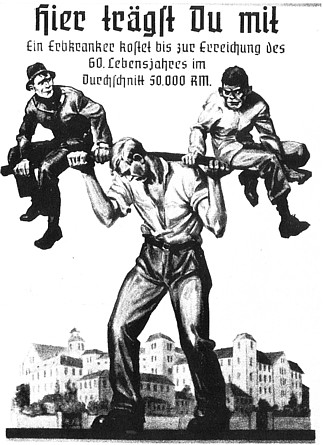
Nazi Eugenics propaganda poster from 1939,
stating "We Do Not Stand Alone"
"...it is possible to a large extent to prevent unhealthy and severely handicapped beings from coming into the world. I have studied with interest the laws of several American states concerning prevention of reproduction by people whose progeny would, in all probability, be of no value or be injurious to the racial stock."
Adolf Hitler came to power on January 30, 1933.  For the first 10 years of the 12 year Reich, eugenicists welcomed his proposed fulfillment of their tenets of identification, segregation, sterilization, eugenic courts and euthanasia.  In July of 1933, Germany passed the "Law for the Prevention of Heriditarily Diseased Offspring".  This law provided legal grounds for the sterilization of people deemed by a court hearing to be "unfit".  This law provided that any person with a hereditary disease could be sterilized if there was a high probability of it being passed on to future generations.  Those listed included "Congenital Mental Deficiency" (such as Down syndrome), schizophrenia, bipolar disorder, epilepsy, Huntington's chorea, blindness, deafness, any severe deformity and those with severe alcoholism.  In the general public, the notion of the "useless eater" was perpetuated.


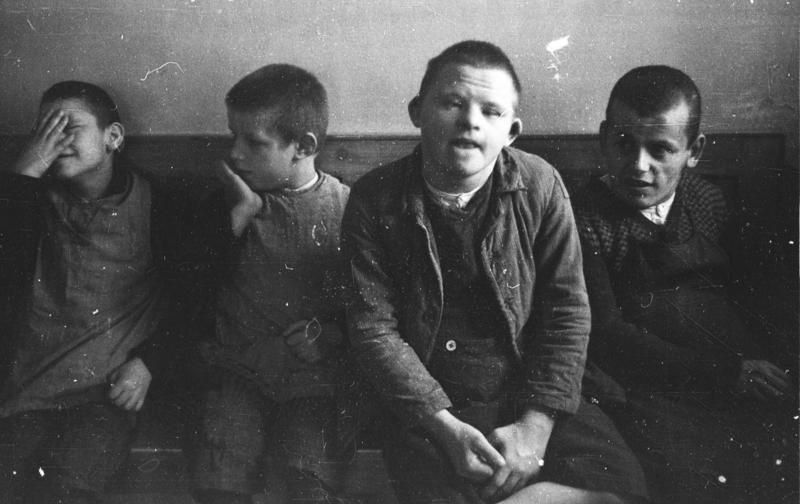
Children at the Schönbrunn Psychiatric Hospital, 1934.
(Bundesarchiv, Bild 152-04-28 / Friedrich Franz Bauer / CC-BY-SA\)
In 1934, the superintendent of Virgina's Western State Hospital complained in the local paper "The Germans are beating us at their own game".   For years, Nazi doctors would continue to routinely consult with eugenicists across America.

Extermination and Aktion T4

The first incidence of state performed euthanasia in Germany was known as the "Child K" case.  Hitler was approached by the parents of a "deformed" child and asked his permission to allow the child to be put to death.  After consulting with his personal physician and chancellor, Hitler granted the child's doctor the ability to euthanize the child.


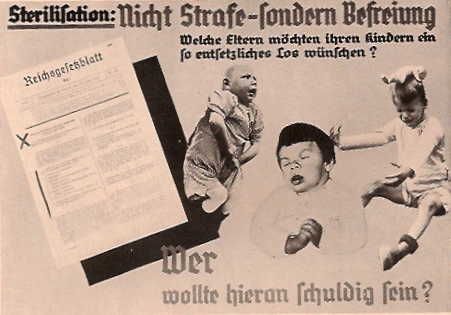
This poster proclaims “Sterilization is liberation, not
a punishment.”
and asks “Who would want to be
responsible for this?”
and features three children

with disabilities.  Photo courtesy of Calvin College
By August 18th 1939, Hitler had created the Reich Committee for the Scientific Registering of Serious Hereditary and Congenital Illnesses (Reichsausschuss zur wissenschaftlichen Erfassung erb- und anlagebedingter schwerer Leiden) which required mandatory registration of all births of developmentally delayed and handicapped children by doctors and midwives.  Children up to three years of age had to be reported to the offices of  the Reich Health Ministry. Code named Aktion T4, Hitler ordered the "mercy killing" of all deemed "life unworthy of life";  this plan focused initially on newborns and young children. The program was managed by Hitler's personal physician, Karl Brandt and the chief of Hitler's private chancellery, Philipp Bouler (the same two whose counsel he sought with Child K). To be included in this program were those with "idiocy and mongolism" (Down syndrome), those with blindness and deafness, microcephaly, hydrocephalus, absence of limbs, mid line defects of the head and spine and paralysis (such as cerebral palsy).  The decision to end a child's life was based on the results of a questionnaire.  No medical examination took place or records were consulted.  Three "medical experts" placed a red + or a blue - on a form marked "treatment".  A minus sign represented a decision by an "expert" to not kill the child.  Three plus signs meant the issue of a euthanasia warrant and transfer to a "Children's Specialty Department".  A unanimous decision was required;  in the event of a split decision, the child was "observed" for a period of time and another attempt would be made to achieve a consensus.

Photobucket Photobucket Photobucket

"Life unworthy of life"

These children were sent to one of six facilities where they were killed by drugs or by starvation.  It is belived that 8,000 children were to lose their lives this way.  In October of the same year, this decree was extended to include older children and adults.  Hitler backdated his declaration to September first and increased the power of
"the authority of certain physicians to be designated by name in such manner that persons who, according to human judgment, are incurable can, upon a most careful diagnosis of their condition of sickness, be accorded a mercy death." 
This would not only dispose of the "useless eaters" but also free up beds in hospitals for wounded Nazi soldiers.  Questionnaires were sent to institutions for the mentally ill, chronically ill and hospitals.  Patients were required to be reported if they had schizophrenia, epilepsy, dementia, paralysis, syphillis, developmental delays, encephalitis, neurological conditions, had been in hospital or institutionalized for 5 years or more, was criminally insane, was a foreigner or was Jewish, African-American or Gypsy.


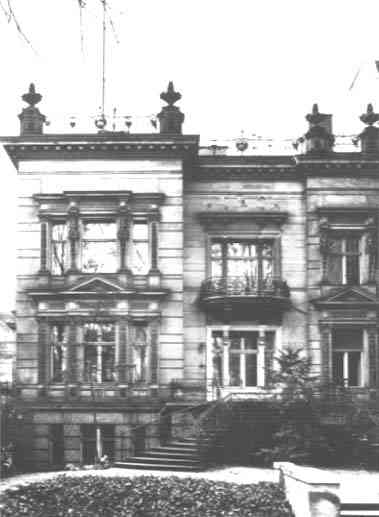
Tiergartenstraße 4, Courtesy of H. E. A. R. T.
There were four main divisions that aided the program that were created in 1939.  The first, the Reichsarbeitsgemeinschaft Heil- und Pflegeanstalten (RAG) was responsible for the distribution and return of the registration forms to the institutions.  The completed forms were forwarded to the "experts" who decided the patients fate.  The Gemeinnützige Krankentransport GmbH" (Gekrat)  was charged with transporting the patients via Gekrat buses to the killing centres, while the Gemeinnützige Stiftung für Anstaltspflege" (Stiftung) created extermination sites by renting spaces, setting up the equipment, hiring staff and managing their budgets.  Finally the  Zentralverrechnungsstelle Heil- und Pflegeanstalten" (ZVST) served as the central clearing office.  The main office was located in Berlin on Tiergartenstraße 4, which gave the program it's name of "T4".  Physicians and medical assistants were eager to assist with this programme as the salaries were made very attractive.

Six main euthenasia sites were created across Germany and Austria.  In January 1940, Brandenburg (near Berlin), Grafeneck (near Stuttgart) and Hartheim (near Linz, Austria) were established;  both Brandenburg and Grafeneck ceased functioning (officially) between September and December of the same year.  Sonnenstin/Pirna (near Dresden) opened in April of 1940 and Bernberg (near Magdeburg) was established in September.  The last to open was Hadamar (near Koblenz) which opened in January the following year (and closed that August).  Bernburg ceased operation in April 1943, while Sonnenstein/Pirna ended in August 1943.  Hartheim was the last to cease it's operation, which it did officially in December of 1944. The Zwischenanstalten were intermediate stops between the patients institution of origin and the killing centres.  They also managed the capacity of the centres and were tasked with 'cover up' for inquiring relatives. It was at Brandenburg, a converted prison, that the first Nazi gas exterminations took place. The T4 victims were gassed in chambers disguised as showers and their remains burned in giant ovens. Families were told that the victims had died of various illnesses including pneumonia or heart failure.  They would each recieve an urn contianing mixed ashes.  The routine deception and gassing/cremation would be used again, only on a much larger scale.


The billowing chimney at Hadamar. Ashes with
human hair would rain down upon the townspeople.
Courtesy of H. E. A. R. T.
Although it was a top secret operation, Aktion T4 became difficult to hide, especially with the dwindiling numbers of the mentally or physically disabled and mentally ill.  Also, the thick, constant, maloderous plumes of smoke from the crematoriums was also difficult to conceal.  It is rumoured that at Haldamar, a former hospital for the mentally ill, children would watch the incoming buses and taunt the inhabitants with "here are some more to be gassed".   Ashes containing human hair would rain down on the town.  Those aware of the goings-on at the six centers were either in favour of the program or completely silenced by fear.

The following three testimonials speak volumes about the killing centres (in this case, Hadamar):
“After doors were closed, the air was sucked out of the gas chamber through a ventilator by the same doctor who carried out the earlier `examination.’ Then for about ten minutes, carbon monoxide was let in [by that doctor] and its effect observed through a small window. As soon as he thought that those shut in had died, he had the gas chamber emptied. First fresh air was introduced through the ventilator, and the gas was forced out. From the beginning of the gassing until the reopening of the gas chamber took about one hour. The corpses that were to be dissected were removed to a special room. However, the great majority of corpses were immediately taken to the ovens and burned there.”
"Through it I saw 40-45 men who were pressed together in the next room and were now slowly dying. Some lay on the ground, others had slumped down, many had their mouths open as if they could not get any more air. The form of death was so painful that one cannot talk of a humane killing, especially since many of the dead men may have had moments of clarity. I watched the process for about 2-3 minutes and then left because I could no longer bear to look and felt sick.”
“Did I ever watch a gassing? Dear God, unfortunately, yes. And it was all due to my curiosity.... Downstairs on the left was a short pathway, and there I looked through the window.... In the chamber there were patients, naked people, some semi-collapsed, others with their mouths terribly wide open, their chests heaving. I saw that, I have never seen anything more gruesome. I turned away, went up the steps, upstairs was a toilet. I vomited everything I had eaten. This pursued me days on end.... Looking into the chamber, I could not imagine that this was completely without pain. Of course, I am a layman and this is just my opinion. A few were lying on the ground. The spines of all the naked people protruded. Some sat on the bench with their mouth wide open, their eyes wide open, and breathing with difficulty.”
[Testimonials courtesy of H. E. A. R. T]

A Catholic Bishop in Münster, named Clemens von Galen, delivered a sermon on August 3, 1941 which denounced Aktion T4 as murder.  The Nazi party was publicly condemned and the faithful encouraged to withdraw from the party due to their "ungodly" policies.  Hitler officially suspended the program 20 days later and in retaliation, beheaded three priests.  At that point, over 70 000 lives had been ended.  Although it had officially been stopped, it continued quietly in the background, especially in the hospitals of conqured territories and for those that remained in the institutions.  Instead of gas, patients were poisoned or starved to death.  Physicians were encouraged to err on the side of death when considering such an action.

The gas chambers used in the euthanasia centres were a testing ground;  the Nazi party used the Aktion T4 experience to aid in the construction of the death camps in places such as Auschwitz and Treblinka.  In fact, many SS officers that participated in the killing centres would go on to command in the camps.  Although officially abandoned, Aktion T4 was still considered a "success" and became the opening chapter in what would become the Holocaust.

Meanwhile, in the Allied countries, increasing numbers of institutional workers were being drafted, leaving the already overcrowded conditions even more destitute.  Although the horrors of the camps and Aktion T4 were exposed after the war, people continued to be sterilized against their will, long after eugenics was abandoned as a "science". In parts of Canada for example, this would continue well into the 1970's.

[Next time:  Abandonment and Abuse]

----------------

Black, Edwin. War Against the Weak: Eugenics and America's Campaign to Create a Master Race. New York: Four Walls Eight Windows, 2003. Print.

"Disability History Exhibit." Disability History Panels. Alaska Department of Health and Social Services, n.d. Web. <http://www.hss.state.ak.us/gcdse/history/HTML_Content_Main.htm>.

Grant, Madison. The Passing of the Great Race or The Racial Bias of European History. New York: Charles Scribner's Sons, 1916. Print.

Hitler, Adolf. Mein Kampf. Germany: Eher Verlag, 1925. Print.

Lifton, Robert J. The Nazi Doctors: Medical Killing and the Psychology of Genocide. New York: Basic, 2000. The Holocaust History Project. Web.

"Nazi Eugenics and Euthanasia." Holocaust Education & Archive Research Team. H. E. A. R. T., 2010. Web. <www.HolocaustResearchProject.org>.

Paralells in Time; A History of Developmental Disabilities, The Minnesota Governor's Council on Developmental Disabilities, 2012.

Popenoe, Paul, and Roswell H. Johnson. Applied Eugenics. New York: MacMillan, 1918. The Project Gutenberg EBook of Applied Eugenics. Project Gutenberg, 17 Oct. 2006. Web. <http://www.gutenberg.org/files/19560/19560-h/19560-h.htm>.

Van Wagenen, Bleeker, "Preliminary Report of the Committee of the Eugenic Section of the American Breeders' Association to Study and to Report on the Best Practical Means for Cutting Off the Defective Germ-Plasm in the Human Population" (2009). College of Law Faculty Publications. Paper 74. <http://digitalarchive.gsu.edu/col_facpub/74> 

[Originally appeared on Down Wit Dat]