Showing posts with label Down syndrome is natural. Show all posts

Wednesday, October 16, 2013

Keeping it Real

I'm not unhappy.  My life is pretty good.

I know this will cause many of you to say "duh!" rather loudly, but there are a lot of people out there that still can't wrap their heads around this.

We're not unhappy.  Life is not hard.

Oh sure, we have our fair share of poopy diapers and kitchens that don't clean themselves.  There is drama.  There are skinned noses, hurt feelings and juice spilled from one end of my house to the other.  There is life, sure.

But we're happy.

There are a lot of things we would like to change, of that I have no doubt.  My husband is a stay-at-home Dad and I'm pretty sure he'd be perfectly happy to be back at his old job on those weekends when I work nights.  Surrounded by the aforementioned poopy diapers, swimming lessons, yell-y kids, an utter lack of privacy, quiet, and a complete thought; he'd be bananas not to.  But, he's not miserable.  The little ones go down for a nap at some point and the big one is content to hang out playing video games or quietly watching a movie in the mean time.  In a related story, I'd give my (honorary) left nut to be able to stay home with the kids.  Ok, I'd probably work one day a week, but to not have the responsibility of everything fall directly on my shoulders is a nice dream too.  Something for "when we win the lottery".  I think there are times when we would both change this part of our lives.

But, we're not unhappy.  Not in the least. 

Back in the early days, the just post-potential-diagnosis-but-not-sure-but-there-is-an-AVSD days, I was pretty sad.  I had a right to be, having just lost an Aunt I cared about very much (and didn't call much in her final years) and almost losing a very dear colleague in a horrific car crash.  I was also super pregnant with twins, super heavy, slow, in pain almost constantly and had to wear "Batman" anti-embolism hose that took me no less than half an hour to sweat my way into each and every day (and a nerve wracking 5 minutes to gently fix every time I had to pee, which at that point was eleventy-zillion times a day).  I was very sad when I was told about my unborn baby's diagnosis.  As time went on, I was told I was sad as I was "grieving my perfect baby".  Once they were here, once we knew about Wyatt's karyotype, once the twins were being kept alive in the NICU, I was told by a social worker and every piece of literature that I was handed that I was grieving.  As I continued to write updates to my family, that is how I described it.  Grieving.  Down syndrome was making me grieve.

I learned more about DS when I  got the babies home.  I also learned all about them, their individual personalities and got really into the swing of being the parent of infant twins.  It was then that I started to figure out my emotions a little more.  Ok, so DS wasn't what I originally imagined for the ONE baby that I thought I was going to conceive, but really, is that one little chromosome the source of all my sadness?  How about postpartum blues, post-surgical pain, recovery, or multiple personal losses?  In relation to my son's very real cardiac condition and the two fragile lives for which I was terrified, how about simple fear?  In retrospect that sounds like the recipe for postpartum depression, not my son's T21.  My own husband, upon hearing the "grieving" bit, argued with me.  "It's not like anyone has actually died!"  he said to me, exasperated. His mother had passed away suddenly in 2001 and it was this very real loss that he referenced now.  However, as told to us by that social worker that came to see us while we held our tiny sparrow babies, we were grieving our son's Down syndrome diagnosis.  It was only natural, after all. 

It took me quite some time to sort out my thoughts and feelings, probably compounded by my early return to work and the challenges I faced because of that.  As the children grew and my son became more of a boy and less of a baby, it became more evident how he was just himself, not some list of potential or actual diagnosis, not some 'special' baby, not the source of any familial discontent.  You see, I was told that my husband would leave me, that having a disabled, a "retarded" baby would ruin our lives, our marriage.  I was told by many "well meaning" people that it was a good thing that "Down's children" were so loving as I would have a forever child.  I was told by every medical source, by every appointment, by every medical professional that his extra chromosome would be the cause of a life of sickness.  I was told by a nurse that it was a good thing he was a boy, imagine how tragic it would be if he was a girl?  I was consoled for his birth, often multiple times a day.

I wish I could wave the realization of what I had attributed exactly to his extra chromosome off as a "D'oh!" or "A-ha!" moment, but the reality is I was deeply ashamed at my participation in the "love the baby, hate the disorder" mentality.  How I would love him "despite" his Down syndrome.  How as a family we would "overcome this obstacle".  You can see that here in past posts, as my writing changes and as I became more of the advocate that I am today.  Of course, I still had to really start to check my ableism at the door and realize quite a few more things, but you can see where I actually started to get it.

This month, being Down syndrome Awareness month in the US, you would expect me to be all over this like in years past. But, I'm not.  There's a lot of reasons here, ranging from current personal illness to personal perspective.  I'm not so keen on the "awareness" any more;  the colours, the gew-gaws, the posters.  Instead I'm all about the education or the advocacy part.  Even the activism part.  One could argue that I always was more of an advocate than awareness raiser given the topics of most of my posts in Octobers past... I may partially agree with you too.  However, as I've stated before, I'm done with awareness.

Instead, I'm going to advocate.  Hard.  It may not be pretty, it will probably seem to some like I'm shouting.  It may seem to some that I am full of hate and anger and all the things that I am accused of because I don't write about unicorns and rainbows and flatly refuse to accept things as gospel as they have been "always done this way".  So be it.  I will continue to challenge the stereotypes and whatnot that many people maintain as "fact" about Down syndrome.  There will probably be swearing.  This is what I do. 

That particular social worker is no longer telling new parents of children with T21 about grieving the diagnosis.  In fact, I've helped develop resources for new parents.  This blog is routinely passed out as a reference and I have been personally thanked by a great many people.  I am no longer misplacing my emotions onto my son.   He is no more or no less stellar than any other child of mine.  My desire from day one was to ensure that nobody else would either, even if I couldn't process or understand it properly.  We are not unhappy.

We're us.  Full of emotions and drama and all the little things that make up Team Logan.  Sometimes we're happy, sometimes we're sad.  Sometimes we're silly and giddy sometimes we get frustrated with one another, hell, even argue.  Sean and I worry about the things that other couples do, like money and our health and whether or not we're getting enough sleep.  The kids romp around here together, spreading chaos and love in their wake... and occasionally whacking each other with toys.  Down syndrome is literally a microscopic part of that, if it is really a part of that at all.

We're not unhappy. We're real.

I long for the day when no one is surprised at that statement.


[A banner for Down Syndrome Uprising, depicting the text "Down Syndrome Awareness Month,
with the word acceptance stamped over the word awareness.]

[Originally appeared on Down Wit Dat

Saturday, August 3, 2013

The Problem With Down Syndrome: Part 2

I just want a healthy baby.  I think every single prospective parent must utter these words at some point, but it is worth questioning.

One "common sense", yet false, assumption is that Down syndrome itself is a state of poor health.  Then, it goes without saying that the ideal state of affairs would be to get rid of Down syndrome.  This is the logic I hear time and time again in news articles, comments, off hand remarks from strangers.

It makes sense, right?  Down syndrome comes from the presence of an extra chromosome.  That extra chromosome causes the body to malfunction, right?  Therefore, Down syndrome IS poor health.  So therefore, our goal should be to make sure no one is born with Down syndrome.  Wait.  Can we slow down?

Discussing medical risk solely in terms of Down syndrome reduces a complex individual into a one-dimensional picture painted with a single color called "extra chromosome".  Most parents who get a Down syndrome diagnosis find themselves sinking into a black hole of terrifying statistics.  I don't wish to minimize these, but it isn't the whole picture.

The third chromosome isn't an unsightly ink blotch of risk on an otherwise pristine piece of paper.  We all carry risk by virtue of living.   We all carry higher risks by belonging to certain definable groups.   Sickle cell anemia.  Tay Sachs.  Cystic Fibrosis.  Thalassemia.  Familial Mediterranean fever.  It took me ten minutes of an internet search to learn about this handful of medical conditions, all of which are more prevalent in certain genetically related groups.  I'd guess that there are many genetic bases for disease and illness, science just hasn't found the common thread yet.

Also, why have I never read a single media story mentioning that living with Ds isn't solely about medical risk?  What about better prognosis after leukemia and seizure disorders, less hardening of the arteriesdiabetic blindness, fewer solid tumor cancers, fewer cavities, and lower likelihood of both cerebral palsy and high blood pressure?  Genes do not act in isolation, and I wish there were more balanced attention paid to the fact that Ds is not a disease unto itself, but a genetic existence.  Unusual, sure, but not a disease.

I also wonder what effect the diagnosis in and of itself has on rates of detection of health "problems".  When we got our diagnosis, we went through months of medical appointments to rule out statistically likely medical issues.  The results?  We have "discovered" some, but are choosing medical intervention for only hypothyroidism.  While the reasons we did all those tests were based on a real risk, I also wonder how much is confirmed simply by looking.  If I had subjected my other children to the same battery of medical screenings and tests, what would we have found?

Again, I'm don't want to minimize the real health concerns, and I think we need more understanding of what Down syndrome is, not less.  There are clearly differences relating to having three copies of a chromosome.  Still, the mainstream image of Down syndrome being a form of poor health in a way fundamentally different than a person with typical chromosomes doesn't feel right.

Lastly, I sense a real stigma permeating the discussion of medical risk and disease.  Now, I don't have a child with a significant medical issue.  (This of course, like for any human being, could change.)  However, when I read the comments in these articles talking about the new research, it almost feels as if the assumption is that an person gets leukemia, infantile spasms, Alzheimer's, etc., because of his inherently defective genetics.  To be sure, a significant risk factor could be Down syndrome, but the exact hows and whys that an individual develops a disease or condition is very hard to know.  There is no health condition that is unique to Down syndrome, after all.  My real concern: Doesn't this stigma contribute to discrimination against people with Down syndrome overall?

I just can't accept it as simple common sense that Down syndrome is unhealthy.  I just can't lay all of that on one chromosome.  Risk and statistics are very complicated, and tell us mostly about large groups of people.  It is harder with a single individual.  Just ask the mother who had a baby with Down syndrome after receiving 1 in 1000 odds after screening.  Clearly, she had a 100% chance of having that baby, but simply did not know every single factor that may have calculated into that equation of chance.

I'm saddened by the general public's quick leap into assuming that the ideal application for this new research is to "cure" or "prevent" Down syndrome itself, rather than treat a specific disease to enhance an individual's comfort and quality of life.  No one contemplates getting rid of an entire group of people in the name of better health, except, it seems, when it comes to genetic differences such as Down syndrome.  I know that the research is probably not intended as such, but why is the rest of the world so quick to go there?

My son with all 47 chromosomes is here to stay.  Let's slow down and try to understand what science has to offer, before we make any assumptions.  Down syndrome is part of genetic diversity.  It has been in existence for as long as humans have, and will continue to be.  Perhaps we should stop thinking that people with Down syndrome are surviving despite their 47 chromosomes, but with their 47 chromosomes.

Next up: Intellectual Disability*
* This, of course, assumes that I'll be able to keep my focus on this one topic of thought.  Wish me luck, as it is not a given.
********************
Edited to add: It has become apparent to me that I haven't addressed the topic of stigma against illness and disease enough.  I do not believe there is a hierarchy of human worth based on health status.  In fact, I believe that this tendency to define Down syndrome in and of itself as a unhealthy also contributes to sometimes poor medical care for those with complex medical needs.  I can't list the number of times I have heard parents express that doctors were less willing to intervene in serious medical situations because of their belief that "Down syndrome is just like that".  What I truly want is for each individual to be treated as a unique case.  Down syndrome must be accounted for when assessing medical needs, to be sure, but it can't be the entire picture.  ~jl

Monday, July 29, 2013

Believe and Live


I love this article by Anita Cameron about different kinds of disability advocacy tools. She argues that nothing will ever get done without direct action. "Right on, right on," I say. I believe that too. Nice is not enough. But still, taking direct action implies we all know, and agree on, just exactly what we are fighting for. Right?

So what is it? What am I doing here and elsewhere?

For me it all comes down to acceptance, meaningful inclusion, and equality.

None are currently a complete reality, but they all are the logical next step for humanity which evolves and progresses (and thus isn't on a crash course with some sort of an apocalypse). But most people don't seem to know that.

We need vision.

So much about all of this is vision. So much about this is expecting more than we think will happen, faster than we think anything will happen. It is expecting a large scale societal change and behaving as if this large scale change is imminent. Practically already here. Happening as I shout.

It is about not getting discouraged and just doing what's best for my specific kid or myself, right here and right now.

I don't want to only focus on the haters and the trolls, I want us to sway those who lazily vacillate, those who have good intentions, and those who just don't know any better. I want to scream our vision the loudest. To make it the all-encompassing truth, the reality, the now.

I want to kill the positive stereotypes and the well-meaning misunderstandings about a 'mystical' chromosome. I want to stop allowing for reductionism for inspiration's sake because it is the lesser of two evils.

In my vision the evil trolls will be recognized as the minority they are. Those closeted sociopaths. I'm not so worried about that anonymous, faceless person who spews his or her vitriol in an online comment to an article about a person with a disability. I'm more worried about my kid's future teacher, her friend's mother, my neighbor, and that guy who packs my groceries. I worry that they won't really believe in inclusion because they haven't experienced it, that they won't see it as the most logical thing to do because no one's told them that it is.

I don't worry so much about hate as I do lazy ignorance. I don't worry so much about someone blowing off steam, than I do those minds who've never even really thought about people with Down syndrome or other disabilities as fellow human beings, because they're so used to understanding 'able is normal' as a fundamental fact, just because it gets insidiously reinforced at every turn. I worry about those who perceive people who are disabled as inspirational, marginal, apart, similar amongst themselves, and here on earth for purposes external to themselves, purposes other than living their individual lives. A perceived unity of the experience of disability concerns me.

Most people follow, they adapt, they go with the flow. We, as advocates, need to define the current.

We have an audience.

We can set targets all we want and meet them, but unless we actively work to redefine the rhetoric - the way most people view disability and especially intellectual disability, language and all - we'll always have new targets, new ways of oppression, and the fight will never end. We can't just tackle the immediate, we need to reconstruct the foundation. Sometimes that involves peering inwards too, at our own world view and thinking. It has very much meant that for me, at least.

There is a lot of discussion about being united and unified in our efforts, but how can we? We don't agree. For me there are things that simply cannot coexist if an ableist way of thinking is to be dismantled.

I can't be all "accept my kid as is, but in case you do figure out how to suck that extra chromosome right out of her very cells, please call us, we're interested." You can't say "my child deserves to be included in everything her peers are, but you know, if she gets bullied or we feel she's getting frustrated with learning math, relocate her into a nice self-contained location, for her own sake." We can never say "achievements and normalcy are arbitrary social constructs and we need to understand that, but hey, more therapies to help my struggling child the better, before she falls too far behind her peers."

I will have to constantly examine my own thinking, my own language. Will it be my child who is frustrated, unhappy, struggling, or will it be me? Am I fixing my child for the world instead of the world for my child? When did a life of achievements become the life?

We have to turn the tables.

We have to say "There is no discussion. Inclusion has to be a fact as it is a practice that benefits all. Inclusion is the natural state of things. Through inclusion everyone's experience, everyone's life will be just that much more normal (pun very much intended), and everyone will be accepted as a member of the human race and society, with whatever that entails, attempts at peaceful coexistence and conditional love."

We can't try to sell or market disability: "please accept my kid, she is not just a useless eater, she can do all of these things." Doing things isn't a precursor to humanity, being human is. We can't mystify or romanticize the chromosome and ascribe to it some specific, sometimes even supernatural-sounding traits or abilities: "Looksee here, that chromosome's special, if we eradicate it, we eradicate our pathway to the mysteries of cancer treatments or Alzheimer's." Three copies of the 21st chromosome are a part of 6 million people worldwide, and that should be enough to warrant general scientific interest. Or at least I'm going to act as if it is.

I will believe it and live it.

Disability is natural. Down syndrome is natural. It's about time everyone knew.


This post originally appeared on 21+21+21=? 

Saturday, July 13, 2013

A Year Ago Today, or Letting the Past Person You Were Deal With Her Shit

Last year, on the 11th , I spent the day in a fine state of anxiety. The Dr. who had performed my amniocentesis had said there was a possibility that the 11th might be the day they received my FISH results. I practiced being positive by telling my mom and H "Down syndrome is not a big deal. It's going to be okay." My inward reflections were a bit more complicated. I would go to the bathroom and cry quietly because I didn't want my mom or H to worry. At about noon, I started to relax because even while I did want to know, I also kind of didn't. There was a bit of peace in that in between land but if I was honest, it was peaceful because I would tell myself that Jude did not have Down syndrome.

The peace was shattered when the phone rang at 2:00. The results were in. Jude had Down syndrome. I  spent a lot of the day weepy. Not from sorrow or regret. I was scared. I didn't know much about Down syndrome. I cried from the fear. But I also cried because people reached out to me. Women on the pregnancy board at Baby Center told me it was going to be okay. My friends told me it was going to be okay. My husband and my mom told me it was going to be okay. The only one who worried it wasn't going to be okay seemed to be me. '

But what I did know was important. I knew that I wanted this little fetus growing in my belly as much as I had wanted all my other beasties. Love is a powerful thing. But sometimes even love's light doesn't chase the shadows away.


The real stuff happened in the coming months. The hard stuff. The good stuff. Because here's the thing. I wouldn't go back in time and tell the past Ginger anything. She had some shit she needed to work through you see. And yeah my bad ass future self feels a little bad for her tears and boohooing BUT...

Well let me haul out my favorite Audre Lorde quote: "I urge each one of us here to reach down into that deep place of knowledge inside herself and touch that terror and loathing of any difference that lives here. See whose face it wears. Then the personal as well as the political can begin to illuminate all our choices." I used to focus on the Master's tools part of the quote which I left out in this space because I realized how incredibly fucking important the remaining piece is to becoming a person of conscience, compassion, and action. You see the personal as political isn't about your warm fuzzy feelings, or about spilling your guts in a tell all memoir. Instead, it's something harder, something that requires work, and frankly, something that feels pretty damn awful while you're going through it. The personal only becomes political when you finish an examination of how you embody the power that oppresses you and others. When you root it out, acknowledge it, and turn into an impetus for change.

What happened is that for the next five months, I had to do this hard work. I had to face my own prejudice about people with intellectual disabilities. I'm not going to make any excuses for myself either. It doesn't matter that I didn't know anyone with Down syndrome. Not knowing people who are different in various ways is not an excuse for ignorance or intolerance. Nor does it matter that I was scared. I say this because I had to be frank with myself. I knew better, you see, because I have studied difference. I have lived with it in various ways. But there was still deep inside me a fear of a certain kind of difference. A fear that came from my own arrogance, my own insecurities. I who had placed so value on the academy was about to give birth to a child who challenged if that was even valuable. 

And trust me I believed some bad shit. I thought she was going to be hideous and thus had to root out all my bias on difference being beautiful.  Difference is beautiful I would come to see before I even laid eyes on my lovely daughter. People with Down syndrome are beautiful. Very. In fact, I think beauty is so much bigger than I ever allowed myself to see.

I thought people with Down syndrome were dull and uninterested in the world. I began to read about people with Down syndrome. They were clearly engaged and excited about the world. Many were artists. Some were activists. And most were just average people like me. Living life as it came at them. 

I thought that Jude would be a drain on her siblings. I worried that I would spend so much time "fixing" her that they would resent the lost time. I feared they would not want to take care of her when she was older. What I learned is that people who siblings with Down syndrome have more positive experiences than negative.

Somewhere along my dark journey to true love, I also learned that people with Down syndrome sometimes go to college. But by that point it no longer really mattered. Because what I had really learned through all this was that people with Down syndrome were different, yes, but different in the ways that we are all different. They were different from each other. Different from me. They were varied, individual with different interests, passions, lives. The only one common experience they seemed to share was that a lot of people didn't see them as being fully human. People like me. And then I shed some tears about my own small cruelty found in ignorance. But after those tears I pulled on my big girl panties. Because seriously? You don't want to fuck with my beasties. And there's a fight to be had here and now for Jude and for people like Jude. Human people. Real people. People who deserve equal care, equal rights, and the opportunity to live a full, varied life. 

The personal became the political before I even held Jude's tiny body in my arms. And that is how I became a better person. Not through Jude but because I wanted to be a better person FOR Jude. FOR my other beasties. FOR the world. So no I wouldn't go back and give the past Ginger any tips. She clearly had some shit to work through.

Wednesday, July 10, 2013

Picking Rocks

"Ableism is so pervasive that it is difficult to identify until one begins to interrogate the governing assumptions of well-intentioned society. Within the space allowed by these rhetorical premises, ableism appears natural, necessary, and ultimately moral discrimination required for the normal functioning of civilization."
[A]bleism is that most insidious form of rhetoric that has become reified and so widely accepted as common sense that it denies its own rhetoricity—it "goes without saying." To fully address it we must name its presence, for cultural assumptions accepted uncritically adopt the mantle of "simple truth" and become extremely difficult to rebut. As the neologism "ableism" itself testifies, we need new words to reveal the places it resides and new language to describe how it feeds. Without doing so, ableist ways of thinking and interpreting will operate as the context for making sense of any acts challenging discrimination, which undermines their impact, reduces their symbolic potential, and can even transform them into superficial measures that give the appearance of change yet elide a recalcitrant ableist system..."
[Excerpts from  James. L. Cherney's "The Rhetoric of Ableism."]
 
I'm a mother and a nurse, not a scholar.  I'm not going to make any pretensions about that.   I'm also a half-assed gardener and occasionally, I take a pretty picture of something I've grown or of someone to whom I've given birth.  As a "writer" I am one voice in the wilderness of the blogosphere.  I came into this role woefully unprepared and in the process have discovered many things about Down syndrome, our world, our Western society and indeed, myself.  I started this place as a "Mommy blogger" and am slowly growing into a disability advocate.  I started out thinking that I could try to change a few minds and that would help create a world that was more receptive to people like Wyatt.  I wanted to help build a garden where old stereotypes did not linger in people's minds. A world where the phrase "my son has Down syndrome" would not automatically generate uncomfortable looks, apologies or awkward exclamations of sentimental rubbish.

Lately, I've been preoccupied with the subject of ableism and how it impacts my son.  Western culture is rife with it.  It is buried, deep within the rhetoric, deep within the language that we use to share our opinions to one another.  When it comes to the subject of advancement of people with intellectual disabilities such as Down syndrome, the tools that we advocates have chosen to use may appear to advance our goals of inclusion and acceptance. Sadly, those tools, in many cases, do the exact opposite.  How we view disability, how we see each other, how we as parent and friend advocates feel about the the world-at-large all impact our efforts. I've also realized that I shouldn't be planting anything for my son, but rather preparing the soil for him to sow a garden of his own.


It was those two quotes above that finally clarified what I had suspected for some time.  We are overgrown with ableist rhetoric, whether we mean to be or not, no matter how "good" our intentions. On the surface, the very words that we choose shape how others perceive us and how we see the world. The grand daddy of them all, the R word, is a perfect example of this.  However, the dialogue goes deeper than that.  Like rhizomes, negative concepts that shape our entire perception of disability are spread throughout our history, dating back to Aristotle.  As Cherney states, ideas such as "normal is natural", "disability is evil" and the "body is able" are rampant throughout the Western world.  Other rhetoric, including those that incorporate socioeconomic or religious ideals (such as "disability is uneducated", "disability is baseborn", "disability is ethnic") seem to sprout up everywhere.

These are all part of our great post-colonial tradition of "less than".  Our everyday language shows that we see others with disdain.  That able and functioning at optimum physical perfection is what we are all supposed to be and anything else is a failure;  lesser;  unworthy.  Even amongst "disabilities" there is a difference.  We in the Western world commonly refer to those that employ physical assistive devices such as wheelchairs and support animals as "differently abled".  Those that have cognitive impairments however are "developmentally disabled".

There's a fossil in there somewhere...As I've mentioned, I come from a medical background.  For years, I embraced a more mechanical definition of disability, which in its most basic form states "this part isn't working as it should, therefore the patient is disabled". The person is seen as broken, malfunctioning, stunted.  This quickly leads to pity disguised as empathy.  Then to romanticism, as an artistic touch is now given to what is "broken".  A more realistic viewpoint is the social model; this way, disability is described by a series of barriers, exclusions and negative attitudes (that includes language).  An individual may have a physical, cognitive or psychological difference from their neighbours, but it is the lack of societal provision that makes it an actual disability.  Humanity is diverse and flourishing;  it is only when a person runs into a situation where their needs are not met, can they be defined as actually having a disability.  Most can easily relate this model to well known things, such as ramps or closed-captioning. However, when it comes to DS and challenges of communication and interpretation, as a culture we cannot seem to move beyond the medical model.  No one seems to want to say that it is society that has disabled these individuals, not their neurological makeup.  Even within the whole of the disability community itself, those with Down syndrome and related developmental disorders are considered less than.

From the medical tradition you also get the -isms:  Infantilism, where those with DS are seen as adult babies,  "Baby Huey", or 'forever children'.  It is probably the most insidious, as it strips all dignity and sense of self and worth from the individual.  They are forever dependent, in the most basic sense.  There is also Anthropomorphism, where those with Down syndrome are referred to in supernatural or angelic terms or possessing traits that are more like "powers".   Quite possibly the most sneaky of them all (and one that I am guilty of as well) is Paternalism, where all decisions, beyond a point where they should be made by the person themselves, are removed and placed in the hands of those who are deemed--by the same abilist society--as being more qualified, be they parent, school, doctor or organization.   This model often decides "what is best" and assumes as Cherney states, that "it goes without saying", based on old, outdated practices and ideas.  For example, we are told that those with DS do not follow "typical" patterns of growth or development and that these ideals should not be applied.  Yet, we still continue to apply them with the attitude of "how else will we know whether the child is behind?",  instead of just allowing the child to develop at their own pace in a loving, supportive, caring environment.  IQ tests are culturally biased and archaic, yet we still continue to use them to determine 'level of cognition' and therefore predetermine a person's 'functionality' and thereby, worth.  Our organizations, both religious and philanthropic, readily fall into this trap too, as they betray their roots as the charities that they were originally founded as, to help "the poor unfortunates".   Regardless of the origin, regardless of some degree of "good work" having been performed, regardless of intent, the result is the same:  an abilist act grown of an abilist system.  Each and every time it is employed, it undermines those with Down syndrome.  It hampers efforts to become more visible, for those with DS to move out of the world of poverty and neglect.


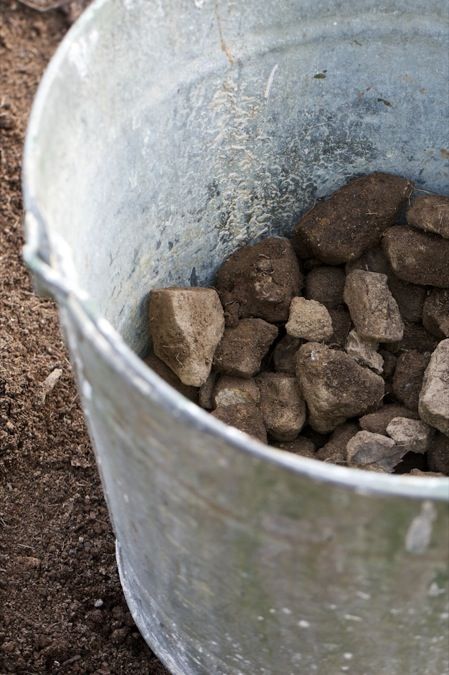
Rocks Not surprisingly most of the Down syndrome advocacy movement is borne of this ableist system, myself included.  We allow the rhetoric to continue by ignoring demeaning language such as the R-word,  by describing our loved ones in childish terms, by giving them "angelic" or "superhuman" qualities, by romanticizing the medical definition of disability and by continuing to make all decisions for them.  We, the people that are supposed to be helping, are only perpetuating stereotypes.  Pictures of good looking kids with catchy sayings may sound like a good idea (and I won't deny that there was a certain purpose served by this initially), but they are not.  My son's extra chromosome is not kitsch, it is not property, it is not made of love.  He is not an angel and he himself is not perfection incarnate.  I did not design him either, nor do I believe a supreme being handcrafted him for our family... I only had the pleasure of providing half of his genetic material.

I've run into a lot of nationalism too.  Recently I read a Letterman-style "Top 10" list of reasons why one particular country was the best in which to raise a child with complex needs.  The article will no doubt be shared far and wide within the advocacy communities and it saddens me, as the article itself is so rife with inconsistencies, poorly researched half-truths and flat out falsehoods that it actually turned my stomach to read it.  Blogging communities seem to be often divided among these national lines as well.  There also seems to be some kind of hierarchy in the advocacy world;  the more disabled your child/loved one/you are, coupled with the amount of "time served" you have in this community, the more of an "expert" you are. Assuming there is such a thing in the first place. Politics within the movement itself are rapidly threatening its very life;  I don't know whether to laugh or cry when I see those calling for inclusion acting very negatively and exclusive in their practise. 

Finding your niche...But what about the world outside?  Much of what gets published about Down syndrome or special needs in the mainstream these days might as well be misery peddling. Subjects that go well beyond simple anticipatory grieving seem to be de rigueur and are now perpetuating the negative stereotypes that we are fighting so hard against. Initially, I'm sure this trend was meant to be a way for parents to find fellowship in what can be some very long and seemingly isolating days.  But, how much negativity can one person read surrounding a certain condition before they start applying those traits to that condition?  In our sensationalist world, unless a piece about disability keeps things at status quo (ie: 'less than'), it is not publishable.  Full of anger towards your child's diagnosis?  Blame your child's diagnosis for your own personal issues?  STOP THE PRESSES!  Depression, disgust,  having to "force" one's self to play with one's own child... these are are all things that go well beyond the realm of a grief reaction or situational crisis and in the end only feed our detractors and probably belongs in a therapist's office.  In the end, which is worse?  Our own community disparaging those that they claim to represent, or those outside that hate our kids? 

Then there is the stereotypical "Down syndrome superstar", who by having a prom date or scoring a goal or participating in a major life event, allows all to feel misty, paternal feelings.  Add a little more anthropomorphism, in the guise of "angels" and "my child has made me a better person" and you have the  domain of inspiraporn, which is just more ableist rhetoric.  The reality is that not every child will be a superstar and the effects of the extra chromosome will vary from child to child, as well as the resources and supports made available to them.  I'm personally guilty of this one, not realizing that the reason I felt the way I did when Wyatt was diagnosed with his AVSD (and probable chromosomal disorder) in utero, was the ableist society in which I lived.  If my culture had not continued to push the idea of the "hardship" or the "broken child", would I have been as sad as I was initially with his diagnosis?  Would I have grasped blindly for for the first sign of positivity,  the first glimmer of "hope" in the form of staged photo-ops and over the top inspirational motifs?  Let me put it another way:  if one truly accepts people with intellectual disabilities and developmental delays as equals, these stories would not be news.  However, many cling to them desperately, willing to overlook the weeds of ableism and instead renaming it a wildflower of "awareness".


"Bucket of Rocks" shared with
permission from Chiotsrun.com
What this civil rights movement needs is more visibility.  Not from parents or people like me, but from the self-advocates themselves.  That is why I share almost everything from VATTA blog on our Facebook page.  It is the people with Down syndrome who need to create the language that describes them, it will be the self-advocates that create the new rhetoric to promote neurodiversity.  It is happening.  Slowly, seeds are germinating.

As one of my children has Down syndrome, I've had to evaluate my perceptions of disability over and over.  How will this affect Wyatt?  How can we, as his parents, best guide him to adulthood and allow him the freedom to advocate on his own behalf, whatever form that may take?  To reach "his full potential" on his own terms, not our abilist ones? At what point do I stop "parenting" and become "paternalistic"?  For now, I guess, my job is to continue to expose the rhetoric and ableism while nurturing the creation of a new construct, a new set of definitions that not only include neurodiversity but were created within that community.  Despite how disheartening all this can be sometimes, despite how physically and emotionally exhausting it is, I will continue to prepare the soil of this revolution.  My family will continue to explore the world of Intellectual Disability and Developmental Delay the only way we can, through the eyes of others, including our son.  I must persist with preparing this earth for my kids as they grow.  I know, one day, my son will communicate "It's ok, Mom... I've got this" and I will happily put down my bucket and drink a Mojito in the shade.  Until that time however, there is much work to be done.  All are welcome to offer a little sweat equity;  there is a lot of weeds to clear, soil to turn and rocks to pick...


"Picking Rocks.." shared with permission from Chiotsrun.com
---------------------------
Cherney, James L. "The Rhetoric of Ableism." Disability Studies Quarterly 31.3 (2011):  The Rhetoric of Ableism | Cherney | Disability Studies Quarterly. The Society for Disability Studies. Web. 03 July 2013. 

[Originally appeared on Down Wit Dat]  

Wednesday, June 12, 2013

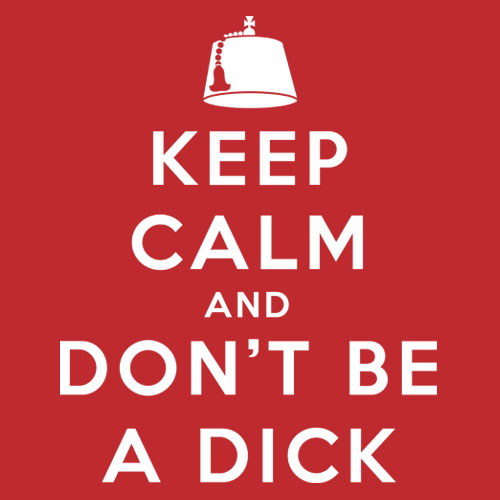
Don't be a Dick*

Being a bit of a geek, it shouldn't be surprising that I adhere to Wheaton's Law.  For those that aren't familiar with this little bit of memedom, Wil Wheaton (of Star Trek: TNG fame) in his keynote speech at the Penny Arcade Expo (PAX) in 2007, stressed the importance of sportsmanship, in this case referring to online gaming.  It culminated into one phrase: "don't be a dick".  Not surprisingly, this little idiom has taken on a life of it's own;  Wil's Birthday, July 29, is now "Don't be a Dick Day".  It's premise is pretty simple;  don't be a dick.  In the last little while, quite a few things have come across my path that have me saying "what a dick!" and wishing that people would start applying Wheaton's Law to and in the disability community.


Wheaton's Law.  There are shirts.
For example, service animals are becoming more common and being used for many different things these days.  However, you would be surprised at the amount of discrimination that still occurs.  This story happened a few years ago in Toronto, where a medal winning athlete was denied entry into a gas station due to her seeing-eye dog.   Not all service dogs are German Shepherds or Labrador retrievers or even seeing-eye dogs for that matter;  my friend M. has a service dog, a darling pile of fluff named Edgar.  He is a miniature Yorkshire terrier and helps her with her symptoms of Post Traumatic Stress Disorder.  Edgar is fully certified and although he doesn't wear a vest (he is too small), M. carries all his certification with her everywhere that they go.

The other day, she went into a nail salon/spa that she had frequented for years.  While lying quietly on a table for a facial treatment, she was accosted by a very hostile and threatening woman.  The woman bent down to speak to M. face to face and loudly objected to Edgar's presence stating that he "would get the place shut down by the health department".  My friend, once she had regained her composure (and been able to stave off symptoms, thanks to Edgar's intervention), attempted to explain her service dog's role to the woman, even going so far as to pull out his documentation. M attempted to show his certification again a few minutes later and was greeted with more ignorance, conversation bordering on verbal abuse and most sad of all, silence from the shop's owners.

My friend will never go there again.  What was once a place of peace, comfort and happy memories for her and her daughters is no longer "safe" (for her or Edgar).  It pains me to hear this as this is not the first time that this has happened to her.  This year even.  M. has been humiliated by people demanding to know her reason for her PTSD and what service Edgar could possibly provide.  My friend is not about to discuss the horrific physical, mental and sexual abuse that she endured at the hands of her own parents, especially to complete strangers. Yet, people feel they have the right to ask this of her, despite the documentation.

So, when it comes to service animals, don't be a dick.  Not every service animal is a large dog or even a dog, for that matter (I have seen pot bellied pigs and small horses as well).  You do not have the right to demand an explanation other than the animal's certification.  You also don't get to pass judgement on what you believe is a proper application of such an animal.  Not every disability is visible as well;  what may not be apparent to you may be quite debilitating to another.

I don't consider myself to be a "mommy blogger" (although I do know quite a few successful ones).  I'm not confident enough to consider myself a writer, so I tend to refer to myself as just a blogger.  Before the twins, I was was happy to prattle on about my garden and random things that popped up in my life [read:  a forum to entertain my family and friends and show my photography]. That changed with Wyatt's prenatal diagnosis and the writing that came out of that which would eventually became Down Wit Dat.  As I found out new things, I shared them with my family and friends.  That group has grown over time;  I've never claimed to be an expert.  I'm just another advocate (and not a "mommy advocate" either).

In my travels, I talk to a lot of other bloggers.  Some are very successful, some are commercial and do this for money or promotion, some blog for advocacy and some just do it for a love of writing.  There's a degree of camaraderie, sure, but at least in the "disability communities", there is a lot of animosity as well.  We all have a voice, we all have struggles.  We all have learning needs and different personalities and let's face it, I for one am not everyone's cup of tea.  However, there's this trend to discourage and disparage "younger" (less experienced, with younger aged children) bloggers and advocates and it's kinda disturbing.  I'm hearing "too angry" and "too young" and "too inexperienced" and "too disrespectful" and a whole other bunch of wacky stuff.  I can't speak for anyone other than myself, but "too angry"  is not exactly what is happening over here at the Logan Homestead.  Even when I'm being particularly passionate about something, I'm hardly angry to the point of uncontrollably shaking my fist to the sky (I have been accused of that one, actually). I don't have the energy for that level of unbridled emotion, frankly.

Besides, I'm Canadian.  We don't do a lot of that here.  We're more apt to write a polite letter to our riding's Member of Parliament, to ask them to consider submitting a well thought out and sober article of legislation.  When it comes to the blogosphere, we all have something to offer, even if we all don't agree.  I for one, want to hear the experiences of those that have gone before.  I want to hear what went right and what went wrong.  Not so that I can tell you that I think you did things incorrectly, but so that I can learn from it and make my son's experience better (and improve it even more for the kids that come after him). 

So, bloggers ("Mommy" or otherwise), don't be dicks.  Personal struggle is not a contest.  No one wins in the end for time served. There is no "rank", this is not the military.  I may not know exactly what year 15 looks like with a child with DS, but I do know what I want it to look like.  You probably don't know what it is like with twins where only one of them has DS, either... just as I don't know what it is like to be an adoptive parent or a same-sex parent or any other kind of parent other than myself.  We're all trying to make a world that accepts those that are different than most as a matter of course.  When we waste our energy on each other needlessly, we just look like, well, a bunch of dicks.

My last stop on this "Don't be a dick" train is person first language.  I'm a big believer in PFL and have been since I encountered it in 1995 in one of my nursing classes.  It's not rocket science:  people are more than their conditions.  Mr Smith may have schizophrenia but he is more than simply "a schizophrenic".  Such reference is dehumanizing.  Calling my son a "Downs" or "Downy" or any other permutation, other than "he has Down syndrome" is dehumanizing.  

The exception to this lies with the self advocate.  Through the words of a few bloggers in the autism community that I respect greatly, I have gained an understanding into the continued use of "autistic" as opposed to "person with autism".  As it was explained to me, by a person who is autistic, it wires a person different;  to remove the processing disorder would remove a great part of the self.  Although I would like to disagree in theory, I respect their opinion.  Those possessing the characteristics in question get to determine the language used to describe those characteristics.

Comparing Down syndrome to ASD is like comparing apples and pelicans anyway. 

The current consensus of the self advocates in the Down syndrome community is to use person first language and it is to that I will defer.  So please, don't be a dick.  Down syndrome is not an adjective.  The words you choose to describe people shape the perceptions of those around you.  We cannot create a world where differences are accepted and even celebrated if we denigrate people through the words we use to describe them.  It's not a matter of your "rights" to "free speech", it's a matter of recognizing another's humanity.

So there you have it.  When it comes to the world of "disability", invoke Wheaton's Law.  Don't be a dick.  Make every day "don't be a dick day".

Speaking as a someone who loves someone with a learning disorder, we already have enough of that to deal with.

------
*Unless your name is Richard.

[Originally appeared on Down Wit Dat]  

Monday, May 27, 2013

Normal

It's been well over a month since Wyatt's surgery.  I am starting to feel like myself again only now, after two sun-filled weekends at home.  According to the experts, this is a 'normal' reaction after an extended period of stress, after a perceived threat (in this case, to a loved one).  Despite my profession, I have to keep reminding myself that a low period after a time of intense stress is to be expected.   It's a natural reaction, especially when you consider that my [often precarious] work-life balance was tipped dramatically in one direction then quickly pushed back again. After the surgery, I was going along at a pretty good pace too, or so I thought... until I found myself in an empty room, unsure what to do, straining to hear anything over the silence and my own breathing.  The sudden absence of a presence, one that had haunted us for over two years, left a void that I had to fill.  Over time I did that.  I've made it my own.  After spending time with my family, after spending time in the garden, I feel better.  I feel more like myself; our family life has cautiously settled back into its own rhythm.  Wyatt's progress has been a big part of that:  his rapid healing, his adaptation, his overcoming of things like sore muscles and wired ribs that feel weird has helped us all maintain some clarity as we assume our 'new normal'.  Our post surgical normal.  Our brave new world.

The idea of "normal" seems to have became a theme in the time since my last post.  I swear, I'm running across examples and discussions about this all over the place.  This concept of normal vs broken seems to be a real thing in the DS community (if you can even call it a community any more).  When you think about it, it's no wonder really; after thousands of years of looking at those with Down syndrome and those with intellectual disabilities as "less than" or "broken", modern society is struggling to give these ideas up.  These concepts are familiar and comforting, like an old blanket.  However, it is time to evolve and "put away childish things", as it were.  People with intellectual disabilities are here, have value and worth.  Different.  Equal.  Not separate.

I will agree that the extra chromosome gives a lot of unknowns, a lot of variables.  My first, "typical" child was a "What to Expect..." baby.  Every month there would be a new list of goals, of things he "should be" doing, things he "might be" doing and things that would be coming up soon. Spoiler:  he didn't follow the lists.  Quinn was barely starting to walk at 18 months, but had the vocabulary of a child much older.  He didn't play with toys conventionally either, preferring to figure out how they worked and then make some kind of art statement out of them.  

What we've realized with Wyatt is that development is non-linear.  It is fluid.  He does not progress along a predictable path towards a readily recognizable outcome.  It may take him months to finally realize that tapping his spread palm to his chin means "mother", but in a short period of time can polish off a few skills that took his typical siblings months to reconcile. Instead of sitting still while he recovered from open heart surgery as he could no longer crawl, he instead adapted and learned to "scoot'.  Holy cow is that kid fast.

Even amongst children with DS, there are no set rules.  Not so long ago, pediatricians everywhere adopted a series of Down syndrome growth charts, which for chart/graph minded people like pediatricians, seemed to be a good thing.  It helped everyone to get over the idea that kids with DS were "poorly" due to their (generally) smaller stature when compared to their more typical peers.  These charts are now falling by the way side as not every kid, especially the ones with DS, adheres to a regular growth pattern.  None of my kids have, that's for sure.  Growth charts are a touchy subject with me anyway as I am the Mom of two preemies.  I've found myself shifting from foot to foot with irritation at a number of appointments, as I watch my two obviously thriving children not "measuring up" to what some chart has to say about "healthy growth".

Wyatt, even with his (previously) busted heart, is not broken or deficient.  He does look slightly different than other children I guess.  Most people that see him or his pictures want to nibble him, so I can only assume that he's a pretty good looking kid (which, as his mother I suspected all along).  None of my three look exactly the same...  Quinn is currently in a bag-of-antlers stage, with stunning blue eyes that make you want to fall in and drown. He's also in that stage where some of his teeth are loose, some are sticking out at odd angles and the new ones look like they belong to a horse.  Zoe has my olive complexion.  She has straight hair--which is a sharp contrast to both her brothers and their blonde curls--and soft brown eyes that can go from molten chocolate to granite in seconds. She can also do bridged lateral push ups between the couch and the coffee table.  Genetics are a wonderful thing.  However, due to some physiological differences, Wyatt is considered to have a "visual disability".  It is "visual", as you can see it and therefore--if you talk to a large (ignorant) percentage of the population--get to pass judgement instantly on his abilities by just looking at him.  A casual glance at his twin would not reveal that she has a lisp or delays in her speech or hand tremors that often occur with prematurity.  However, Wyatt, due to the shape of his eyes and his button nose, perhaps the way he holds his mouth or curls his toes, is immediately "recognizable".

There are no delusions about the future.  Wyatt may develop some behavioral problems, that is true.  Having been in Mental Health for years, the place where people with "outbursts" of all shapes and sizes end up, I've had my fair share of experience in this area.  I also know how many of these come about and how easily many instances can be both exacerbated or prevented.  He may not face this, either.  He may speak 'clearly' by conventional standards, or not.  Perhaps he will not speak at all.  Regardless, he will be able to communicate his wants, needs and desires quite well.  You will need to possess the willingness to listen.  It doesn't take much really, other than an attention span and patience that lasts more than a beat or two.  I also won't know until they are grown up whether any of them will have schizophrenia (as I have two cousins with this), will suffer from depression, have diabetes or cancer.  There are variables with all my kids, just like your genetic code will dictate whether your kids will develop the issues that occur in your family. 

I guess, in my mind, that's what really set the "This is Down syndrome" list of illnesses and disorders away for good.  Yes, my kid does go to a lot of doctors.  So do I, when you think about it... and I consider myself to be a reasonably healthy person.  To put it another way, here is a list of things that can "go wrong" if you happen to have Trisomy 21.  Here's a list of things that can "go wrong" if you are human:


It's a big list...


Homo sapiens are a diverse bunch, full of colours, shapes, sizes and bodies that ultimately break down, no matter how much we exercise or how organic our produce is.  Or how many chromosomes we may or may not have.  We are all broken, if that is the criteria you use to determine worth.

I think the sooner that we as a species, realize that all of us have equal value, the sooner we will stop hearing stories like this one, where a hotel in Spain refused to allow children with Down syndrome as they would be "disruptive".  We'll stop perpetuating myths that our kids with intellectual disabilities have an unholy attraction to water or wandering;  kids without DS can drown and bolt without warning just as easily.  I know this, I was that kid.  I would routinely wander off, especially in public.  My mother can tell you many stories about how I would hide in clothing racks or just get lost, period.  My mini-me daughter is shaping up to be the same too, which is going to mean a lot more grey hair in the future (assuming it doesn't just give up and fall out).  Everybody wanders and gets confused by their surroundings from time to time.  If you don't believe me, watch a security camera in a hospital for a length of time.  Trust me, I've seen some things...

Normal, as they say, is simply a setting on the washing machine.  When it comes to people, there really is no such thing.  We're all bags of quirks and "illness" and here for a very limited time.  That includes our members with developmental delays and intellectual disabilities.  There is no "less than".  There is no broken.

There is life:  messy, glorious and mostly mercurial.

[Originally appeared on Down Wit Dat]  

Wednesday, April 3, 2013

Antidote


I don't want to write about Robert Ethan Saylor.

I don't want to write about how he cried for his mother right before he died. I don't want to write about how the people whose actions left him dead are already back at work protecting others, or selling another ticket to a movie, or looking back at that night when a life was lost while they did nothing because someone qualified was taking care of it, or because they were afraid ...of him? I don't want to write about how confused, biased, and embarrassingly void of thought, real research, and understanding the media coverage concerning his death, and his life, has been. I don't want to write about the deafening silence from those who get a salary for representing Ethan and all people with Down syndrome (never again paid by my daughter), and then, too late, filling that empty air with even emptier words. I don't want to write about agendas or people who can't come together even in death, and who bicker, or try to one-up each other in some strange game of 'Whose cause is this?', or people who look at their own child with Down syndrome and still see other, or people who don't see a problem with a police department investigating its own employees. I don't want to write about people who hide behind the anonymity of the internet to spew their venom on 'retards', unsuspecting parents, and at anyone who reads the comment section in a newspaper (you are scum and I feel sorry for you). I refuse to write just because if I don't, the Department of Justice might just think that this horror, this violation of basic human rights, this dismissal of 6 million people has blown over, because there have been some vague promises of 'training' for people, who are supposed to be protecting my daughter as an individual, on how to see her and the other 6 million exactly like her even more differently, as strangers in their own homes, as beings beyond comprehension by the simple power of common sense.


I don't want to. Ethan isn't the cause of this. He isn't to blame. Neither is his Down syndrome. The blame belongs on the shoulders of those whose actions led to Ethan suffocating to death, and on a society in which a person's life is instantly deemed to be of lesser value, less worth saving, dismissible, or to have a potentially dangerous, out-of-control component, when his assumed IQ score is below 70.


Society needs fixing. Those of you who look at Ethan or my kid and don't see a person, an equal, need fixing. Adjustment. Change. You don't get to judge my daughter, I get to judge you.


Successful communication is not an effortless task. Communication takes practice, patience, compassion, and a willingness to listen and to try to understand. Communication takes years and years to learn and even then, in any given situation, at any given time, communication might fail. Even with the best of intentions on all sides.


But what if the intention, the willingness to understand, is not there? What if, instead of seeing and listening to a person trying to communicate with you, all you see is a stereotype?


He isn't small? He isn't cute? He's not smiling either? There's no belly laugh. He's not happy. He's not contained. Where is his keeper? Why is he by himself? Who let him out? He's reacting. He won't understand anything but force. Not fit to be out in public. Those can't be words. They don't understand. They don't think. Did he just say 'mom'? Nah. Couldn't have. Retard strength. Better watch out. 


But what if you grew up having a friend who had Down syndrome? A student in your class? What if the lady who sells you your weekly lottery ticket and you regularly chat to had Down syndrome? What about a coworker, your boss? What if a kid in your daughter's soccer team had Down syndrome, in your son's ballet class, a guy in your aunt's book club, that lady who golfs with your sister-in-law? What if your favorite television show had a character with Down syndrome? How about the bartender at your favorite Friday-night watering hole? What if you had that Friday-night beer sitting by your friend who has Down syndrome, listening to his woman troubles or work stories, and telling him about this weird mole on your back, or how you think your car might not need all of those repairs the shop's quoting you for? What if we valued everyone, included everyone, and then let the chips fall where they may? What if we didn't assume anything, but looked at everyone as an individual?


What if people with Down syndrome really were included in every aspect of society? What if we all made an effort to understand, to communicate?


Simplistic? Maybe. A real choice? Yes.


Include. Interact. Accept. Embrace. All four are choices you can make. Today.

Thursday, March 21, 2013

Down syndrome, Social Stigma and Images of Exclusion

(By Kieron Smith, author of The Politics of Down Syndrome)

Mostly I think people are afraid.

Society has become obsessed with image, consumption and superficiality. Politics appears to be going the same way.

Things have improved for people with Down syndrome since it was first identified 147 years ago, but not as much as they should have. Now we have institutions without walls, where people with DS are excluded from work, integrated education, plus suffer from second class health care and screened out by public health policies.

Society is obsessed with risk, with feeling powerless – Down syndrome is presented as a risk so serious that an national screening programme is required– you get assessed for 'risk' during pregnancy, not chance. Stigma does the rest, images from institutions and from TV series that bang on about difference. The idea of Down syndrome creates a cascade of potential risks and fear of the unknown, stigma.

The danger is that we respond to this scared and superficial environment with piecemeal and superficial solutions.

Visibility of people with DS on billboards, in exhibitions, catalogues and TV ads is all well and good but if people don’t interact, without real inclusion, then these images almost emphasise their own unreality.

In the real world people with learning disability are still excluded - they don’t get to be part of the picture.

The Gulf war was referred to it as a virtual war, so stylised and selective were the images we were exposed to.

So, there is image and there is power.

The images, the oft quoted awareness that people with DS exist, might nag at a few charitable consciences but serve to change little. If anything, because of the distance in everyday life between people with DS and society – then images of difference, in isolation, could actually play to a fear of difference, the other and the unknown.

The point is to change it.

Change will come when the fear is overcome and the stigma dispelled – when people are engaged with people who have DS. Not sharing an ‘endeavour of learning’ somewhere in a different unit – but in the same class, not excluded entirely from the workplace – but working together, not screened out by default.

We need people to speak up, we need self-advocates, we need like many liberation movements before to stand up and demand an end to stigma and we need to demand inclusion at every level of society, and to have big ambitions.

Differences are not deficits – a diverse society is a richer one, at its core the message should be that people with DS are more alike than different – like most groups who have been subject to stigmatisation. But we're going to need to shout louder to get heard.


Today is World Down Syndrome Day and we are blogging about acceptance, inclusion and activism. Join our Blog Symposium!

(A reciprocal link is required:  you can find the code to add to your blog underneath the "linky".)


This Blog Symposium brought to you by:

 photo DSUbannersmall2_zpsfa60ecbb.jpg

Add your WDSD post now!

Here are the code sources for your blog.  If you require instructions as to how to add the linky to your blog, click here.  Examples are provided.

For Blogger:
 
<div style="text-align: center;">
This Blog Symposium brought to you by:<br />
<br />
<a href="http://downsyndromeuprising.blogspot.com/" target="_blank"><img alt=" photo DSUbannersmall2_zpsfa60ecbb.jpg" border="0" src="http://i1113.photobucket.com/albums/k501/Psychojenic/DSUbannersmall2_zpsfa60ecbb.jpg" /></a></div>
</div>
<div style="text-align: center;">
Add your WDSD post now!&nbsp;</div>
<div style="text-align: center;">
<!-- start LinkyTools script -->
<script src="http://www.linkytools.com/thumbnail_linky_include.aspx?id=189879" type="text/javascript"></script>
<!-- end LinkyTools script --></div>

For WordPress:

<div style="text-align:center;">
This Blog Symposium brought to you by:<br />
<br />
<a href="http://downsyndromeuprising.blogspot.com/" target="_blank"><img alt=" photo DSUbannersmall2_zpsfa60ecbb.jpg" border="0" src="http://i1113.photobucket.com/albums/k501/Psychojenic/DSUbannersmall2_zpsfa60ecbb.jpg" /></a></div>
</div>
<div style="text-align:center;">
Add your R-Word post now!&nbsp;</div>
<div style="text-align:center;">
<!-- start LinkyTools script -->
<p><b>Powered by Linky Tools</b></p><p><a href="http://www.linkytools.com/wordpress_list.aspx?id=189879&type=thumbnail">Click here</a> to enter your link and view this Linky Tools list...</p>
<!-- end LinkyTools script -->
</div>