Showing posts with label civil rights. Show all posts

Monday, December 2, 2013

International Day of Persons with Disabilities - Blog Symposium

What would a truly inclusive society look like? What can we do to create and improve inclusion today? How are you working towards a more inclusive society? Which doors are open, which remain shut? 

3 December 2013 is the International Day of Persons with Disabilities.

The theme for 2013 is "Break Barriers, Open Doors: for an inclusive society and development for all." Read more here.

We will host a blog symposium on this blog on 3 December 2013 to draw attention to what the United Nations has defined thusly:

"Around the world, persons with disabilities face physical, social, economic and attitudinal barriers that exclude them from participating fully and effectively as equal members of society. They are disproportionately represented among the world’s poorest, and lack equal access to basic resources, such as education, employment, healthcare and social and legal support systems, as well as have a higher rate of mortality. In spite of this situation, disability has remained largely invisible in the mainstream development agenda and its processes."

Link up your post and read about others' thoughts and experiences on breaking barriers and opening doors, inclusion, and development. Let's do our part in helping to increase the visibility of those with disabilities.

Linky will be live here on 3 December 2013, 12am EST.

(For step by step instructions to add the linky to your post, click here.)

Monday, July 29, 2013

Believe and Live


I love this article by Anita Cameron about different kinds of disability advocacy tools. She argues that nothing will ever get done without direct action. "Right on, right on," I say. I believe that too. Nice is not enough. But still, taking direct action implies we all know, and agree on, just exactly what we are fighting for. Right?

So what is it? What am I doing here and elsewhere?

For me it all comes down to acceptance, meaningful inclusion, and equality.

None are currently a complete reality, but they all are the logical next step for humanity which evolves and progresses (and thus isn't on a crash course with some sort of an apocalypse). But most people don't seem to know that.

We need vision.

So much about all of this is vision. So much about this is expecting more than we think will happen, faster than we think anything will happen. It is expecting a large scale societal change and behaving as if this large scale change is imminent. Practically already here. Happening as I shout.

It is about not getting discouraged and just doing what's best for my specific kid or myself, right here and right now.

I don't want to only focus on the haters and the trolls, I want us to sway those who lazily vacillate, those who have good intentions, and those who just don't know any better. I want to scream our vision the loudest. To make it the all-encompassing truth, the reality, the now.

I want to kill the positive stereotypes and the well-meaning misunderstandings about a 'mystical' chromosome. I want to stop allowing for reductionism for inspiration's sake because it is the lesser of two evils.

In my vision the evil trolls will be recognized as the minority they are. Those closeted sociopaths. I'm not so worried about that anonymous, faceless person who spews his or her vitriol in an online comment to an article about a person with a disability. I'm more worried about my kid's future teacher, her friend's mother, my neighbor, and that guy who packs my groceries. I worry that they won't really believe in inclusion because they haven't experienced it, that they won't see it as the most logical thing to do because no one's told them that it is.

I don't worry so much about hate as I do lazy ignorance. I don't worry so much about someone blowing off steam, than I do those minds who've never even really thought about people with Down syndrome or other disabilities as fellow human beings, because they're so used to understanding 'able is normal' as a fundamental fact, just because it gets insidiously reinforced at every turn. I worry about those who perceive people who are disabled as inspirational, marginal, apart, similar amongst themselves, and here on earth for purposes external to themselves, purposes other than living their individual lives. A perceived unity of the experience of disability concerns me.

Most people follow, they adapt, they go with the flow. We, as advocates, need to define the current.

We have an audience.

We can set targets all we want and meet them, but unless we actively work to redefine the rhetoric - the way most people view disability and especially intellectual disability, language and all - we'll always have new targets, new ways of oppression, and the fight will never end. We can't just tackle the immediate, we need to reconstruct the foundation. Sometimes that involves peering inwards too, at our own world view and thinking. It has very much meant that for me, at least.

There is a lot of discussion about being united and unified in our efforts, but how can we? We don't agree. For me there are things that simply cannot coexist if an ableist way of thinking is to be dismantled.

I can't be all "accept my kid as is, but in case you do figure out how to suck that extra chromosome right out of her very cells, please call us, we're interested." You can't say "my child deserves to be included in everything her peers are, but you know, if she gets bullied or we feel she's getting frustrated with learning math, relocate her into a nice self-contained location, for her own sake." We can never say "achievements and normalcy are arbitrary social constructs and we need to understand that, but hey, more therapies to help my struggling child the better, before she falls too far behind her peers."

I will have to constantly examine my own thinking, my own language. Will it be my child who is frustrated, unhappy, struggling, or will it be me? Am I fixing my child for the world instead of the world for my child? When did a life of achievements become the life?

We have to turn the tables.

We have to say "There is no discussion. Inclusion has to be a fact as it is a practice that benefits all. Inclusion is the natural state of things. Through inclusion everyone's experience, everyone's life will be just that much more normal (pun very much intended), and everyone will be accepted as a member of the human race and society, with whatever that entails, attempts at peaceful coexistence and conditional love."

We can't try to sell or market disability: "please accept my kid, she is not just a useless eater, she can do all of these things." Doing things isn't a precursor to humanity, being human is. We can't mystify or romanticize the chromosome and ascribe to it some specific, sometimes even supernatural-sounding traits or abilities: "Looksee here, that chromosome's special, if we eradicate it, we eradicate our pathway to the mysteries of cancer treatments or Alzheimer's." Three copies of the 21st chromosome are a part of 6 million people worldwide, and that should be enough to warrant general scientific interest. Or at least I'm going to act as if it is.

I will believe it and live it.

Disability is natural. Down syndrome is natural. It's about time everyone knew.


This post originally appeared on 21+21+21=? 

Friday, July 26, 2013

A Brief History of Down syndrome - Part 7: Abused, Neglected, Forgotten


"Euthanasia through neglect..."
– Albert Deutsch

As World War II raged on, the number of admissions to institutions continued to increase.  The amount of workers in the institutions continued to decrease however, as more men were being drafted every day for the war effort. Overcrowding quickly became the norm once again, with patients in hallways and even sharing beds. Without privacy, without comfort, without possessions, without support, patients were completely dehumanized and ready targets for abuse.  Conscientious objectors, those citizens who refused to fight in the war for ethical reasons, were readily employed by the institutions to help fill the ranks.  It is these people that began to expose the horrors of mass violence and neglect.


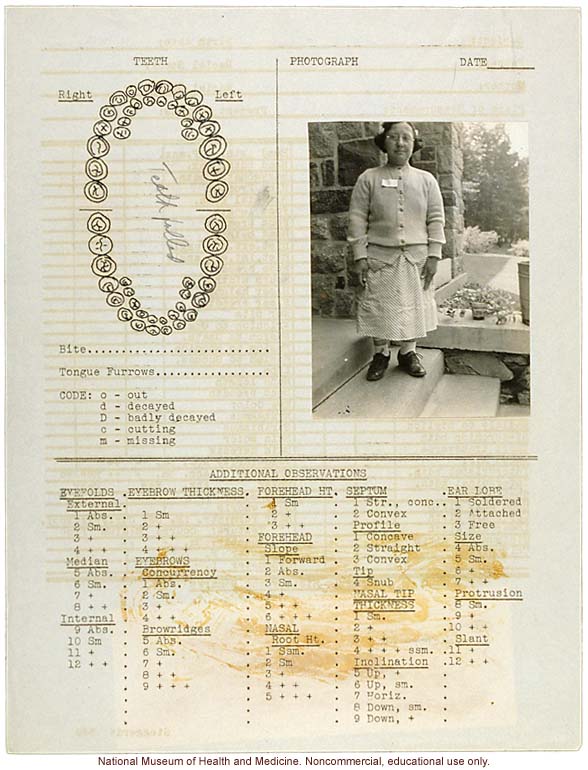
Patient record from Letchworth Villiage.
Photo courtesy of The DNA Learning Center
Those with disabilities were viewed as sick within a system that was highly medicalized;  each institution was run by physicians and staffed by nurses.  In the US, "state hospitals" housed the mentally ill while "state schools" held those with intellectual disabilities.  Areas within both were referred to in terms of "wards" or nursing units. "Patients" had "charts" and attended "therapy" or "programs".  People were referred to by their disabilities, thereby fostering more dependance on the medical establishment.  As feeble-mindedness was "incurable", patients under this system would require complete care as it was due to their "sickness" that people were institutionalized.  At the same time, many cities in the US continued to uphold "Ugly Laws", passed earlier in the century which made being disabled a crime.  This piece from the Chicago Municipal Code, sec. 36034 includes the following ordinance (that was not repealed until 1974):
"No person who is diseased, maimed, mutilated or in any way deformed so as to be an unsightly or disgusting object or improper person to be allowed in or on the public ways or other public places in this city, or shall therein or thereon expose himself to public view, under a penalty of not less than one dollar nor more than fifty dollars for each offense."
"We were greatly heartened by the appearance. It resembled a
college campus." Image courtesy of the Disability History Museum
After the war, doctors continued to urge parents to place their children in institutions.  During this time, having a child or family member with a disability was seen as a burden.  This story from The Rotarian in 1945 clearly displays the thinking of the day where "A Father" outlines the reason for institutionalizing his daughter for a "hopeless brain condition", diagnosed after a stay at a children's centre:
"After two weeks of observation and a brain X ray, the doctors decided that Mary Lou had a hopeless brain condition and recommended that for our own good and the welfare of the two children we place her in an institution."
The "brain x-ray" in this case is probably referring to a common diagnostic technique of the time, Pneumoencephalography, whereby small holes were bored in the skull, the protective cerebral spinal fluid drained from around the brain and replaced with gas, usually room air, oxygen or helium.  An x-ray was then taken.  The procedure was quite painful, caused headaches, nausea, vomiting and delerium that could last months until the body naturally replaced the cerebral spinal fluid. At worst, it could cause brain damage, paralysis and death.

"A Father" felt, if Mary-Lou was kept at home, it would disrupt family life and result in public ridicule and shame;
"If we did [keep her at home], we should have to curtail normal family activities, to make the environment as simple as possible, for, as is typical in such cases, Mary Lou became frantic over the bustle of the simplest household tasks. We knew, too, that we would have to devote the major part of our time to her, leaving her little brother to develop as best he could. We felt that he already had been neglected.

Also, having witnessed the ridicule and ill treatment which residents of our home town turned on the "village half-wit" and his family, we understood what keeping her with us would mean to our family..."
Her admission to a state facility was described as quick and efficient;  the results curative.  The story concludes with "And so tragedy came into a family that barely knew the word. We think, we pray, we have faced it wisely".

Between 1946 and 1967, the number of people with disabilities that were housed in public institutions in America increased from almost 117 000 to over 193 000, a population increase that was almost double that of the general post-war "baby boom".  As time went on, those admitted were becoming younger and their disabilities more pronounced. In regards to Down syndrome in particular, there were many cases where fathers and doctors conspired to have a baby institutionalized and then told the mother that the baby had died.


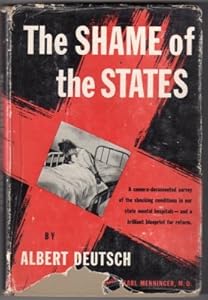
Albert Deutsch, who has been described as "a crusading journalist" wrote The Shame of the States in 1948, a compilation of his serial articles (previously published in major newspapers) which exposed the conditions of Letchworth Village in New York.  At the time, Letchworth was considered to be one of the better institutions in the US, as it had taken great pains in its creation to ensure that the overcrowding and abuses that had occurred in other places would not be repeated there.

Opening in 1911, Letchworth Village was one of the first completely encapsulated "state schools".  It included its own farm, power plant and hospital.  In the words of the first superintendent, Charles S. Little;
..."buildings should not be more than two stories high, nor should they contain more than seventy inmates; that the basements should not be used for purposes other than storage; that the dormitories should be at least two hundred feet apart, with sufficient space for each to have its own playgrounds; that there should be such separation of groups that inmates of one grade could not come in contact with those of another grade; and that in locating the buildings advantage should be taken of the natural beauty of the place."


Photo of Letchworth Village, looking like a college campus.
Patients were divided into separate categories or "grades" and were kept apart:  "moron", "imbecile" and "idiot", the last deemed "untrainable" and therefore initially excluded from admittance to Letchworth as they were unable, in his eyes, "to benefit the state".  As further described by Little:
"...it is a home where the feeble-minded and epileptic of all ages may be given the pleasures and comforts of the ordinary home. To this end our day rooms will be provided with games, colored pictures, flowers, music, etc. Each dormitory will have its own playgrounds where base-ball, football, basket-ball, croquet, etc., may be played by the children. Swings, hammocks, and picnic grounds will be provided for in a grove. Holidays will be celebrated in an appropriate and American fashion. A birthday party will be given each month for those having birthdays that month, making a gala evening for all. Inmates and employes will join in a weekly dance. There will be Sunday services appropriate to the condition and belief of the various inmates."
Residents tended to fields and flocks of livestock, built roads, shoveled coal and made toys at Christmastime.  It may sound idyllic, but by 1921, of the 506 people listed at Letchworth, 317 were between the ages of 5 and 17, while 11 were under the age of 5.  Their labour force consisted mainly of children and visitors and staff would report shortages of food and that the patients looked ill and malnourished. 

As time went on the population at Letchworth continued to grow.   Despite this, the state refused to construct any additional buildings and by the end of 1921, 1200 patients were housed there.  By the 1950's, that number had swollen to over 4,000.  Families were abandoning their relatives there to be forgotten.  Deutsch called it "euthanasia through neglect...".

Photographer Irving Haberman did a photo series on Letchworth which further exposed the conditions of the dirty, malnourished, neglected unkempt patients.  Residents are seen huddling naked in the day rooms. Similar exposés were done on many other institutions;  Time magazine would feature Byberry Hospital, also known as the Philadelphia State Hospital, in 1946 which exhibited appalling imagery of overcrowding, abuse and severe neglect.

The Nuremburg Code was created in 1947 and gave worldwide guidelines for human trials and experimentation.  However, many children in the state schools were still the subjects of experiments, including early testing for vaccinations. Many doctors at the time argued that these rules applied only to Nazi atrocities, not American medicine.  The first polio vaccine was in fact tested at Letchworth in 1950, after much lobbying by the then superintendent, Dr. Jervis.  By that time, Letchworth was considered to be highly regarded in the medical community, despite it's shady reputation in the greater community.  The Fernald Center in Massachusetts (superintended by eugenisist Walter E. Fernald) was the site of a joint experiment between MIT, Harvard University, The Atomic Energy commission and the Quaker Oats Company that exposed male patients to radioactive isotopes between 1946-1953.   Parents were given the following notice:
Dear Parent:
In the previous years we have done some examination in connection with the nutritional department of the Massachusetts Institute of Technology, with the purposes of helping to improve the nutrition of our children and to help them in general more efficiently than before.
For the checking up of the children, we occasionally need to take some blood samples which are then analyzed. The blood samples are taken after one test meal which consists of a special breakfast meal containing a certain amount of calcium. We have asked for volunteers to give a sample of blood once a month for three months, and your son has agreed to volunteer because the boys who belong to the Science Club have many additional privileges. They get one quart of milk daily during that time, and are taken to a baseball game, to the beach and to some outside dinners and they enjoy it greatly.
I hope that you have no objection that your son is voluntarily participating in this study. The first study will start Monday, June 8th, and if you have not expressed any objections we will assume that your son may participate.
Sincerely yours,
Clemens E. Benda, M.D.
[Fernald] Clinical Director
What was not mentioned to the parents was that the calcium given to their children in the milk was radioactive.

From the mid 1950's to the early 1970's, researchers at the Willowbrook State School in New York, carried out experiments on children that were deliberately infected with Hepatitis A and then treated with gamma globulin.  In the early years of the study, patients were fed infected fecal matter.  Later they would be injected with more pure versions of the virus.  Those that investigated the abuses surmised that the children would probably have gotten Hepatitis at Willowbrook anyway due to frequent outbreaks, so that it was probably "for the best" that they got it under such scientific circumstances.  At one point the school was closed to new admissions, except for the Hepatitis program.  This led to parents agreeing to allow their children to be the subjects of experiments, just to be able to admit their child to Willowbrook.  Either way, both parents and children were given very little choice whether or not to participate in the program.


Patients at Letchworth.  Photo courtesy of Bob Paley
Between 1917 and 1967, those that died at Letchworth, Willowbrook and other facilities like them, were buried anonymously. Steel or stone numbers were their only monument, possibly due to cost or at the families wishes of privacy.  Regardless, even in death, these people were denied their basic humanity, up to and including their own name.

In 1948 in Great Britain, the National Health Service (NHS) was introduced and institutions were now nationalized and transformed into actual hospitals (yet run like schools).  Emphasis then shifted to admitting only the most disabled and those with behavioural issues. Also that year, the National Assistance Act (which replaced the "Poor Laws" of Elizabeth I) made it a duty of local authorities to  arrange assistance for those who were deaf, blind, dumb, handicapped by illness, injury, congenital deformity or suffering from a mental disorder (which included developmental delays). This included increasing access to specialized education.


Image courtesy of The Minnesota Governor's Council on Developmental Disabilities
In 1950, another surge of advocacy took place in the United States.  Parents had begun to organize and had created the National Association of Parents and Friends of Retarded Children (which would later become The ARC).  By 1952 many US states had created legislation for educating children with intellectual disabilities (although those that were classified "moderate" to "severe" were excluded).  As the 20th century would progress, the horrors of the institutions were becoming more commonly known, yet still persisted.  Sterilization, lobotomization, tortuous experimental "treatments" and physical abuse were still the norm and the numbers of children being admitted continued to climb.  Instead of "feeble-minded" "moron" "imbecile" and "idiot" the terminology of choice was now changed to retarded, a blanket term that included any and all learning disabilities and developmental delays. ("Mongolism" would still be used to describe Down syndrome until 1965).  With the ease of one word, society was now able to dismiss an entire segment of the disability community, while callously watching their plight on the evening news.
 
By the 1960's even the architecture of the institutional buildings had evolved to reflect the culture of medicine, of the hospital.  Staff had separate showers, lounges and toilets.  The floors were easy to wash tile, bathrooms were stall-less and completely devoid of privacy for ease of both cleaning and supervising residents en masse.  Furniture was sparse, hard and unwelcoming.  Medical professionals wore clinical white uniforms and jackets, their names and position clearly displayed on name tags.  It was a stark contrast to the patients who wore communal clothing of various states of (dis)repair. It was very clear who was in control.

Niels Erk Bank-Mikkelsen, the director of the Danish national services for Mental Retardation visited an institution in California in the 1960's.  His report included the following "I couldn't believe my eyes. It was worse than any institution I have seen in visits to a dozen foreign countries. . . . In our country, we would not be allowed to treat cattle like that."
From "Christmas in Purgatory".  Image courtesy
of the Disability History Museum

President John F. Kennedy Jr. formed The President's Panel on Mental Retardation in 1962.  The panel was comprised mainly of medical professionals and focused on both treatment and prevention.  "Retardation" itself was seen as something to "combat".

Senator Robert Kennedy toured Willowbrook in 1965, (accompanied by a TV crew) and compared it to a "snake pit".  It's population of 6000 children was 2000 over capacity.  He described the children as "living in filth and dirt, their clothing in rags, in rooms less comfortable and cheerful than the cages in which we put animals in a zoo".  Later he would address a joint session of the New York legislation regarding the "dehumanizing" conditions at both the Willowbrook and Rome State Schools.  During his speech, he declared that the residents of the institutions were denied both access to appropriate education and their overall civil liberties.  The following year, Willowbrook was featured again as one of the institutions in "Christmas in Purgatory" when Dr. Burton Blatt and photographer Fred Kaplan used hidden cameras to capture images of the atrocities in several institutions.  According to Dr. Blatt "there is a hell on earth and in America there is a special inferno".  Senator Kennedy received a great deal of backlash from his comments, most insinuating that non-medical personnel would be unable to classify or understand what they were witnessing in "whirlwind tours".  Dr. Blatt reacted to them thusly:
"It does not require a scientific background or a great deal of observation to determine that one has entered the "land of the living dead." It does not require too imaginative a mind or too sensitive a proboscis to realize that one has stumbled into a dung hill, regardless of how it is camouflaged..."
"Christmas in Purgatory" also gives insight into the treatment of infants and very young children in such places.  Warehoused in extremely overcrowded, spartan surroundings and devoid of stimulation including human touch, it is easy to see how the people there never stood a chance.


From "Christmas in Purgatory".  Image courtesy
of the Disability History Museum
"The infant dormitories depressed us the most. Here, cribs were placed-as in the other dormitories-side by side and head to head. Very young children, one and two years of age, were lying in cribs, without interaction with any adult, without playthings, without any apparent stimulation. In one dormitory, that had over 100 infants and was connected to 9 other dormitories that totaled 1,000 infants, we experienced a heartbreaking encounter. As we entered, we heard a muffled sound emanating from the "blind'' side of a doorway. A young child seemed to be calling, "Come. Come play with me. Touch me."
"In other day rooms, we saw groups of 20 and 30 very young children lying, rocking, sleeping, sitting- alone. Each of these rooms were without toys or adult human contact, although each had desperate looking adult attendants "standing by."
"In some of the children's dormitories we observed "nursery programs." What surprised us most was their scarcity and the primitiveness of those in operation. Therefore, we were not unprepared to see several children with severe head lacerations. We were told these were "head bangers." Head banging is another condition that some people think is inevitable when confronted with young severely mentally retarded children. We challenge this. We have reason to believe that head banging can be drastically reduced in an environment where children have other things to do. The "Special Education" we observed in the dormitories for young children was certainly not education. But, it was special. It was among the most especially frightening and depressing encounters with human beings we have ever experienced..."


This news special produced by NBC in 1968 still clearly shows subhuman living conditions in The Pennhurst State Home in Pennsylvania.


"Suffer the Little Children" by Bill Baldini

Although these reports and many like it would spark legislation that would begin the closing of the institutions, many were open and still functioning like this until the early 1980's. Despite frequent exposés in the Staten Island Advance and other area papers, the allegations of abuse at Willowbrook continued to surface.  In 1972, Geraldo Rivera, then working as an ABC News reporter, went to Willowbrook to film "Willowbrook:  The Last Disgrace".  His story, which won a Peabody Award, showcased the overcrowded, unsanitary conditions and the physical abuse of the patients by the staff.

Even with all the publicity, even with all the images, stories and coverage, the institutions, according to one doctor at Willowbrook, had only worsened since Kennedy's visit.

The classification of "retarded" and related terms would continue to affect public perception and access to care for people with intellectual disabilities well into the 21st century.  In the UK, a pamphlet published by The National Society for Mentally Handicapped Children in 1973 (eight years after the term mongolism had been changed to "Down's Syndrome"), had this to say:

"when informed by their doctor that their child is affected with mongolism and warned that it may show some mental backwardness, parents often imagine the worst and think that their child will never walk or talk.  Although a few mongol children are as handicapped as this and they can live at home when young, they will probably later need permanent hospital care..."

"... Due to their slow intellectual growth most mongols are precluded from making satisfactory progress in formal education of the type provided by Local education authorities. However they benefit from the less formal type of education which they receive at the special centres provided by the local Department of Health although these are not always yet available in the more sparsely populated areas of Britain.

In addition to the two already mentioned there is a third considerably smaller group of children with mongolism who are even less backward and devlop intellectually from a half to two thirds the rate of an average child. Many of this group can profit from formal education, particularly when given in the smaller classes with specially trained teachers in schools for the educationally subnormal"
Doctors continued to refuse lifesaving procedures (such as heart surgery) to those with Down syndrome up until 1984;  in fact there were many physicians that still classified feeding a child with an intellectual disability to be a lifesaving procedure.  Until the institutions were finally closed, hundreds of thousands of people with disabilities had been discarded by their families, segregated, abused sexually, physically and mentally, not to mention violated by sterilization and experimentation.  All with society's blessing as it was considered "the right thing to do".

We may never know the full extent of the abuse, nor of how many people with disabilities were disposed of out of hand, like so much garbage.  It would take almost to the end of the last century for the final institution to be closed.  It would take even longer for the general public to begin to understand terms such as "dignity" "rights" and "civil liberties" in relation to those with intellectual disabilities.  The term "retarded" is just now being replaced in the medical literature; it will no doubt take many more to remove it from Western vernacular.

We in society have a responsibility to ensure that these victims are not forgotten.  We also have a mandate to ensure that such atrocities never happen to another human being ever again. 


Anonymous graves at Letchfield Village.  Photo courtesy of the New York Times.

[Next time:  The rise of the parent advocate]


----------- Applebome, Peter. "Giving Names to Souls Forgotten No Longer." The New York Times. The New York Times, 13 Dec. 2007.

Buteux, Lindsay. "Letchworth: The Village of Secrets." Outlook Student Press. Outlook Student Press, 8 Nov. 2010.

Chicago Municipal Code, sec. 36034 (repealed 1974).

Christmas in Purgatory, Blatt and Kaplan, (Previously published by Allyn and Bacon, Inc., 1966) current copyright, Human Policy Press, Center on Human Policy Syracuse University P.O. Box 35127 Syracuse, NY, 1974. 
 
Corcoran, David. "THIELLS JOURNAL; Graves Without Names for the Forgotten Mentally Retarded." The New York Times. The New York Times, 09 Dec. 1991.

"Disability History Exhibit." Disability History Panels. Alaska Department of Health and Social Services.

Harkins, Don. "Federal Government Publishes Confession; 1995 Report to Clinton Documents 30 Years of Radiation Experiments." The Idaho Observer [Spirit Lake, Idaho] May 1999: The Idaho Observer.

"Legend Tripping in Letchworth Village." AbandonedNYC. N.p., 5 Aug. 2012.
Little, Charles S., MD. Letchworth Village: The Newest State Institution For The Feeble-minded And Epileptic.  The Survey, 12 Mar. 1912.

Paralells in Time; A History of Developmental Disabilities, The Minnesota Governor's Council on Developmental Disabilities, 2012.

Staff (September 10, 1965). "Excerpts From Statement by Kennedy". The New York Times.

Suffer The Little Children, Pennhurst State Home: Eugenics + Social Services - Pennsylvania. Perf. Bill Baldini. NBC10, 1968.

Slater, Catherine, MA. "A History of Mental Disability 1000AD-2000AD:From Idiocy to Intellectual Impairment Web. 22 July 2013.

The Child with Mongolism: 80 to 90 Per Cent Can Learn to Do Simple Tasks. Great Britain: National Society for Mentally Handicapped Children, 1973. Print.

"We Committed Our Child." The Rotarian (1945): Disability History Museum.

"Willowbrook State School." Asylum Projects. Asylum Projects, n.d. Web.
--------------------

[Originally appeared on Down Wit Dat

Tuesday, June 11, 2013

Call To Action: Frederick County Sheriff Department Accreditation Committee

The Frederick County Sheriff's Department is up for an accreditation review with CALEA, a national law enforcement accreditation group. There has been a public call for letters and phone calls from the community. It is time to let Sheriff Jenkins know that we have not forgotten what happened to Ethan Saylor. Tell the committee what happened and let them know that we want justice for Ethan.


Commission on Accreditation for Law
Enforcement Agencies, Inc. (CALEA)
13575 Heathcote Boulevard Suite 320
Gainesville, Virginia, 20155

Dear Assessment Team,

In advance of your audit of the Frederick County Sheriff's Office, I write to highlight my concern regarding that office's handling of Robert Ethan Saylor's homicide at the hands of three off-duty Frederick County deputies.

On January 12, 2013, Mr. Saylor re-entered a movie theater without purchasing another ticket for a showing of Zero Dark Thirty. Sheriff's deputies Lt. Scott Jewell, Sgt. Rich Rochford and Deputy First Class James Harris were moonlighting as mall security that night and were called as such to attend to the situation. The three attempted to forcibly remove Mr.Saylor from the theater; confusion ensued as the guards dragged Mr. Saylor out of his seat. Soon thereafter, Saylor's companion returned to the theater and pleaded with the guards to let her take Mr. Saylor home.

The guards declined. Instead, they continued to apply force against Mr. Saylor, using three sets of handcuffs linked together to pin his arms behind his back. Mr. Saylor ended up face down on the ground, presumably where his larynx became crushed. Mr. Saylor then died of asphyxiation, all over the price of a movie ticket.

Following this homicide, neither the sheriff nor the local prosecutor found any conflict of interest investigating the case, regardless of the fact that the security guards were also deputies of the investigating office. Instead, they kept the matter in the county instead of using outside resources. The locally run grand jury failed to indict the deputies of the use of excessive force. Instead they blamed Saylor's death on his Down syndrome rather than scrutinizing the actions of the three off-duty and seasoned deputies.

Sheriff Jenkins has publicly commented on the problems of moonlighting officers. In the Maryland Community News Online Gazette, he was quoted as saying "“When [deputies] take an [enforcement] action on someone, they immediately fall back into law-enforcement status,” he said. “I’ve said all along that I don’t think law enforcement should be in competition with private security.” Despite his apparent concern about the ethics of such secondary work, Sheriff Jenkins still choose to not call for an independent investigation.

The Frederick County Sheriff's Office's handling of Saylor's homicide calls into question the office's commitment to professional excellence. It is of grave concern that three off-duty deputies, including two of high rank, saw fit to manhandle a young man over the price of a movie ticket to the point of death. Of even further concern is Sheriff Jenkins's decision to keep the matter in house rather than declare a conflict of interest. Such action gives rise to the unfortunate appearance that the Frederick County Sheriff's Office was solely interested in protecting its three officers rather than engaging in a transparent investigation of Saylor's homicide.

Thank you for your time and attention to this matter,

[Your name goes here]

Sunday, June 9, 2013

Call to Action: Va. Lt. Governor Candidate E. W. Jackson

According to his book, Ten Commandments to an Extraordinary Life, the Republican candidate for Lt. Governor in VA, E.W. Jackson, believes that "birth defects" are the result of sin
"It is the principle of sin, rebellion against God and His truth which has brought about birth defects and other destructive natural occurrences."
After centuries of ignorance, we're still battling for basic human dignity.

Tell E.W. Jackson that genetic diversity is not the result of sin.

EMAIL
info@jacksonforlg.com

FOR MEDIA INQUIRIES
press@jacksonforlg.com

ADDRESS
P.O.Box 15003
Chesapeake, VA 23328

PHONE
757-802-4246

TWITTER: @Jackson4VA

FACEBOOK: https://www.facebook.com/jacksonforlg

Monday, May 27, 2013

Normal

It's been well over a month since Wyatt's surgery.  I am starting to feel like myself again only now, after two sun-filled weekends at home.  According to the experts, this is a 'normal' reaction after an extended period of stress, after a perceived threat (in this case, to a loved one).  Despite my profession, I have to keep reminding myself that a low period after a time of intense stress is to be expected.   It's a natural reaction, especially when you consider that my [often precarious] work-life balance was tipped dramatically in one direction then quickly pushed back again. After the surgery, I was going along at a pretty good pace too, or so I thought... until I found myself in an empty room, unsure what to do, straining to hear anything over the silence and my own breathing.  The sudden absence of a presence, one that had haunted us for over two years, left a void that I had to fill.  Over time I did that.  I've made it my own.  After spending time with my family, after spending time in the garden, I feel better.  I feel more like myself; our family life has cautiously settled back into its own rhythm.  Wyatt's progress has been a big part of that:  his rapid healing, his adaptation, his overcoming of things like sore muscles and wired ribs that feel weird has helped us all maintain some clarity as we assume our 'new normal'.  Our post surgical normal.  Our brave new world.

The idea of "normal" seems to have became a theme in the time since my last post.  I swear, I'm running across examples and discussions about this all over the place.  This concept of normal vs broken seems to be a real thing in the DS community (if you can even call it a community any more).  When you think about it, it's no wonder really; after thousands of years of looking at those with Down syndrome and those with intellectual disabilities as "less than" or "broken", modern society is struggling to give these ideas up.  These concepts are familiar and comforting, like an old blanket.  However, it is time to evolve and "put away childish things", as it were.  People with intellectual disabilities are here, have value and worth.  Different.  Equal.  Not separate.

I will agree that the extra chromosome gives a lot of unknowns, a lot of variables.  My first, "typical" child was a "What to Expect..." baby.  Every month there would be a new list of goals, of things he "should be" doing, things he "might be" doing and things that would be coming up soon. Spoiler:  he didn't follow the lists.  Quinn was barely starting to walk at 18 months, but had the vocabulary of a child much older.  He didn't play with toys conventionally either, preferring to figure out how they worked and then make some kind of art statement out of them.  

What we've realized with Wyatt is that development is non-linear.  It is fluid.  He does not progress along a predictable path towards a readily recognizable outcome.  It may take him months to finally realize that tapping his spread palm to his chin means "mother", but in a short period of time can polish off a few skills that took his typical siblings months to reconcile. Instead of sitting still while he recovered from open heart surgery as he could no longer crawl, he instead adapted and learned to "scoot'.  Holy cow is that kid fast.

Even amongst children with DS, there are no set rules.  Not so long ago, pediatricians everywhere adopted a series of Down syndrome growth charts, which for chart/graph minded people like pediatricians, seemed to be a good thing.  It helped everyone to get over the idea that kids with DS were "poorly" due to their (generally) smaller stature when compared to their more typical peers.  These charts are now falling by the way side as not every kid, especially the ones with DS, adheres to a regular growth pattern.  None of my kids have, that's for sure.  Growth charts are a touchy subject with me anyway as I am the Mom of two preemies.  I've found myself shifting from foot to foot with irritation at a number of appointments, as I watch my two obviously thriving children not "measuring up" to what some chart has to say about "healthy growth".

Wyatt, even with his (previously) busted heart, is not broken or deficient.  He does look slightly different than other children I guess.  Most people that see him or his pictures want to nibble him, so I can only assume that he's a pretty good looking kid (which, as his mother I suspected all along).  None of my three look exactly the same...  Quinn is currently in a bag-of-antlers stage, with stunning blue eyes that make you want to fall in and drown. He's also in that stage where some of his teeth are loose, some are sticking out at odd angles and the new ones look like they belong to a horse.  Zoe has my olive complexion.  She has straight hair--which is a sharp contrast to both her brothers and their blonde curls--and soft brown eyes that can go from molten chocolate to granite in seconds. She can also do bridged lateral push ups between the couch and the coffee table.  Genetics are a wonderful thing.  However, due to some physiological differences, Wyatt is considered to have a "visual disability".  It is "visual", as you can see it and therefore--if you talk to a large (ignorant) percentage of the population--get to pass judgement instantly on his abilities by just looking at him.  A casual glance at his twin would not reveal that she has a lisp or delays in her speech or hand tremors that often occur with prematurity.  However, Wyatt, due to the shape of his eyes and his button nose, perhaps the way he holds his mouth or curls his toes, is immediately "recognizable".

There are no delusions about the future.  Wyatt may develop some behavioral problems, that is true.  Having been in Mental Health for years, the place where people with "outbursts" of all shapes and sizes end up, I've had my fair share of experience in this area.  I also know how many of these come about and how easily many instances can be both exacerbated or prevented.  He may not face this, either.  He may speak 'clearly' by conventional standards, or not.  Perhaps he will not speak at all.  Regardless, he will be able to communicate his wants, needs and desires quite well.  You will need to possess the willingness to listen.  It doesn't take much really, other than an attention span and patience that lasts more than a beat or two.  I also won't know until they are grown up whether any of them will have schizophrenia (as I have two cousins with this), will suffer from depression, have diabetes or cancer.  There are variables with all my kids, just like your genetic code will dictate whether your kids will develop the issues that occur in your family. 

I guess, in my mind, that's what really set the "This is Down syndrome" list of illnesses and disorders away for good.  Yes, my kid does go to a lot of doctors.  So do I, when you think about it... and I consider myself to be a reasonably healthy person.  To put it another way, here is a list of things that can "go wrong" if you happen to have Trisomy 21.  Here's a list of things that can "go wrong" if you are human:


It's a big list...


Homo sapiens are a diverse bunch, full of colours, shapes, sizes and bodies that ultimately break down, no matter how much we exercise or how organic our produce is.  Or how many chromosomes we may or may not have.  We are all broken, if that is the criteria you use to determine worth.

I think the sooner that we as a species, realize that all of us have equal value, the sooner we will stop hearing stories like this one, where a hotel in Spain refused to allow children with Down syndrome as they would be "disruptive".  We'll stop perpetuating myths that our kids with intellectual disabilities have an unholy attraction to water or wandering;  kids without DS can drown and bolt without warning just as easily.  I know this, I was that kid.  I would routinely wander off, especially in public.  My mother can tell you many stories about how I would hide in clothing racks or just get lost, period.  My mini-me daughter is shaping up to be the same too, which is going to mean a lot more grey hair in the future (assuming it doesn't just give up and fall out).  Everybody wanders and gets confused by their surroundings from time to time.  If you don't believe me, watch a security camera in a hospital for a length of time.  Trust me, I've seen some things...

Normal, as they say, is simply a setting on the washing machine.  When it comes to people, there really is no such thing.  We're all bags of quirks and "illness" and here for a very limited time.  That includes our members with developmental delays and intellectual disabilities.  There is no "less than".  There is no broken.

There is life:  messy, glorious and mostly mercurial.

[Originally appeared on Down Wit Dat]  

Tuesday, May 7, 2013

An Open Letter to Congressman Van Hollen regarding the Robert Ethan Saylor Case


May 7, 2013

Dear Congressman Van Hollen,

The Down Syndrome Collective, a group of over 2,000 advocates for the full inclusion and human rights of people with Down syndrome, urges you to secure an independent investigation into Robert Ethan Saylor's homicide. Nearly 4 months ago, Robert Ethan Saylor died at the hands of off-duty Frederick County Sheriff's deputies Lt. Scott Jewell, Sgt. Rich Rochford and Deputy First Class James Harris. The local law enforcement community in Frederick has not brought justice to the Saylor family. 

The refusal of the local State’s Attorney, Charlie Smith, to prosecute this homicide—instead using the veil of grand jury proceedings—gives rise to the unfortunate appearance of local law enforcement protecting its own. Smith’s statement following the grand jury hearing demonstrates his eagerness to adopt a narrative exonerating his law enforcement colleagues at the expense of a young homicide victim. By inaccurately stating that Saylor was "compromised by his Down's Syndrome [sic]," Smith has shifted the blame for Saylor's death onto his genetic condition rather than the improper restraint technique employed against him. Saylor was left face down and died of positional asphyxia, a known risk to all people. Most importantly, it remains unclear why Saylor was restrained at all over the cost of a movie ticket. 

Almost exactly two years ago, you honored the 20th anniversary of the Americans with Disabilities Act, acknowledging the need for such legislation because “Americans with disabilities were too often denied the opportunity to fully participate and integrate into our society due to intolerance and unfair stereotypes.” Allowing blame for Saylor's death to be falsely placed on his genetic condition is an example of the same intolerance and unfair stereotyping you denounced. Only an independent investigation can reaffirm Saylor's equal rights as a human being.

Underscoring the need for an independent investigation is the revelation by local media that Saylor suffered a fracture to his throat, with bruising indicating he was still alive at the time of the injury. The article goes on to report, “Experts say it's hard to know how it happened without an investigative report to show what came into contact with Saylor's throat.” Therefore, an independent investigation is the first step towards ensuring justice for the Saylor family.

We ask you to hold the Frederick County law enforcement community to a higher standard of conduct. Without your action, an unarmed man will have died in Maryland's 8th district over the price of a movie ticket without so much as a meaningful investigation. Please reaffirm the right of every person in Maryland to live. Help secure an impartial investigation into Robert Ethan Saylor’s homicide.

Sincerely, 

The Down Syndrome Collective

Wednesday, May 1, 2013

Down Syndrome Uprising's Advocacy Blog Symposium

Before work, after the dishes, in the doctor's office, when the kids are sleeping, at the hospital, hiding in the linen closet, at a traffic stop - What Does Your Ever Day Advocacy Look Like?

Do you change laws, minds, or the world?
 
Advocacy and activism mean different things to different people. For two weeks, Down Syndrome Uprising will be holding a blog symposium to celebrate everyday advocacy in all its forms.

Add your Down syndrome advocacy posts to the "linky" below and read some excellent posts from all over the world.


This Blog Symposium brought to you by:

Down Syndrome Uprising


Here is the code source to copy and paste to produce the return textlink on your blog.  If you require assistance, please contact us here.


<div style="text-align: center;">
<span style="font-family: &quot;Courier New&quot;,Courier,monospace;">This post is part of a Blog Symposium brought to you by:</span><br />
<br />
<span style="font-size: x-large;"><span style="font-family: &quot;Courier New&quot;,Courier,monospace;"><b><a href="http://downsyndromeuprising.blogspot.com/" target="_blank">Down Syndrome Uprising</a></b></span></span></div>
<div style="text-align: center;">
<br />
<span style="font-family: &quot;Courier New&quot;,Courier,monospace;"><a href="http://downsyndromeuprising.blogspot.com/">Add your Advocacy post</a> now!</span></div>

Monday, April 22, 2013

A Step Backwards for Down syndrome Advocacy

I've been out of the loop for a bit.  As most of you know, recently my son had open heart surgery to repair his AVSD.  I haven't been around in the online scene as of late which has been troubling me.

What's troubled me more is a current shift in thinking, especially when it comes to the events following the death of Ethan Saylor.  I was saddened to come back from my hospital hiatus to see that not only some advocates, but even some of the major organizations are pushing towards "Down syndrome specific training" for police and first responders.


I'm not going to beat around the bush: I think this is really a misguided application of energy.  One in fact, that may undo years of hard won advances with Down syndrome advocacy.  There are a few reasons for this, some of which I'm sure haven't been considered by those who are pushing for it.


Firstly, who decides what subjects are taught or what aspects of Down syndrome will be highlighted in this training?  What does this proposed training involve?  Not too long ago, the community was rocked by a supposed "nursing" site posting an old image caricature of an infant with Down syndrome.  Many of the "conditions" presented were irrelevant, occur in the greater population at random and have no bearing on quality of life.  What will affect a person with DS life are things like heart disease, which the general population also has and in much greater numbers.  There are umpteen studies showing that positional asphyxiation is a reality.  Law enforcement and any person using restraint (including us psych folk) are well aware of this.  Every single document, every single video that I have come across in my search clearly outlines the danger of positional asphyxiation.  A person with DS is in danger of dying when restrained face down on the ground, yes.  So is everyone else.  Except in Maryland, apparently.  The reality is, these deputies knew the dangers and chose to ignore them, or quite frankly, simply didn't care.


Secondly, who is qualified to teach 'Down syndrome specific training'?  Physicians?  Lawyers?  Other law enforcement?  The National "Advocacy" Organizations?  Training also needs constant updating and re-certification.  Who designs these courses, who are the supposed experts here?   Who accredits them?  From what sources does their information come from?  If you remove the money from the equation (as people will have to be paid to come up with this course material, train the target audience, maintain the certification and audit those with the training), who really benefits from this training?  The officers, who will look at it as one more thing to endure to get their superiors off their case for one more year?  With that in mind, will these strategies really get incorporated into everyday use?


Thirdly, and most importantly is the glaringly obvious thing that people are missing:


By advocating for Down syndrome specific training, you are further marginalizing those with DS as the "other", as "different" and setting them outside the rest of society.

By stating that people with DS--a population that is as diverse as the greater population it is derived from in the first place--need "special considerations" when being talked to by a police officer, EMS, Firefighter or whoever else you want to extend such "training" to, you are predetermining.  You are profiling, you are prejudging.  People do not fit into neat little boxes.  For example, you cannot deal with every mentally ill person that you encounter identically as there is a pantheon of symptoms and an equal amount of ways that communication can break down. The differences are just as numerous and the analogy holds when you are looking at people with developmental delays.  Every single person is different;  in terms of DS, the extra chromosome can express itself in a multitude of ways.  Some will have sensory issues, most won't.  Most will have heart issues, some won't.  Making blanket statements about anyone, be they developmentally delayed, mentally ill, of a specific ethnicity, or any other difference that sets "them" apart from "us", is dangerous, marginalizing and opens the door for so much abuse. Relying on gross generalizations in times of crisis is poor preparation and serves and protects no one.


I have a great respect for all law enforcement, not just the officers that I cross paths with in my line of work.  I refuse to see police as mindless killing machines who need to be distinctly told not to do something so that all of us can stay safe. The ones in my community certainly aren't, at least not any more.  Back in the bad old days... well, I could tell you stories growing up in this region.  There is a certain level of education that is required to get in now.  There is a certain level of community involvement that is required, you have to be a very well rounded person to be considered, to represent a diverse population safely and with compassion.  That isn't something that is taught or possibly can be taught, it is recruited for.


We need real world solutions, not special training, to keep people like my son from dying at the hands of those who are sworn to serve and protect him and the rest of my family.


With that in mind, allow me to humbly offer the following:


1)  Recognize that a Sheriff is an elected official not simply the "top cop", who can quite easily become as corrupted as any other elected official.  Know your candidates and find out their track record prior to them obtaining office.  Cast your votes accordingly.


2)  Abolish "moonlighting".  The deputies who were responsible for the death of Ethan Saylor were moonlighting as mall security, a job that (if our friends in mall security will forgive me) is well below their level of training.


Let me give you an example.  As an RN, I am not allowed to work as a Personal Support Worker if I find myself strapped for cash.  There is a reason for that:  I have a certain skill set, a scope of practice and a specific license.  If I were able to take a job below that scope of practice, yet in the same field, it would blur a lot of lines.  If I was tending to an elderly client who suddenly developed symptoms that I recognized because I was an RN, I couldn't pretend it wasn't happening because "a PSW wouldn't know that".  By the same token, if I used interventions that I know from being an RN, I would not be able to legally justify/use them due to my current employment as a PSW.  The lines are too blurry, the jurisdictions too different.  I can't be one thing and pretend not to be a couple days a week to work a job with a lower skill set, if only to protect my license and my main livelihood.  You shouldn't have active paramilitary personnel working as mall security either.  When the three men were called to the scene, they were acting as mall security.  Somewhere in there, they decided they were deputies again.  Regardless, they sure became deputies again (and invoked all rights and privileges as such) once Ethan was dead.


If I need a little extra cash, I pick up overtime.  The police in my area work along the same lines.  There are also a lot of paid duty opportunities for police as well.  This is why here, you find uniformed officers at ball games, outside construction sites, doing patient watches in hospitals and at the liquor store at Christmas.  During such, they are expected to fulfill the responsibilities that their uniform dictates.  If malls and whatnot expect a certain level of security, they pay for it.  Offer the police a little respect and pay them properly to perform their duties as police officers.  They earned it. Allowing active, trained officers to take lesser skilled jobs in a related field is simply asking for trouble and opens the door for tragedy, as it did in Maryland.


3)  Recognize that compassion cannot be taught or encouraged in those that aren't receptive.  Recruit accordingly.  There are some that go into policing that are angry, have deep set prejudices and too easily cross the line.  We all know stories of this, of cops that take it too far.  Take this guy or this guy, or this guy.  But, for every horror story, I'm betting there are 10 great officers (both men and women) who actually do care about the community they serve.  You need more of them in the field, not just in front of the camera when the politicians feel it's appropriate.  It is possible to have a general sensitivity towards various cultures and groups and still be able to control a situation (and ultimately ones self).  It's been put forth by one blogger that we live an ugly world and if there was more compassion we would not need police or even soldiers as there would be no war.  I'm not talking about achieving Utopia here; sometimes force is a necessary evil.  However, I guess I'm a bit spoiled coming from Canada.  We don't have legions and legions of soldiers.  The ones we do have are respected across the globe for their compassion and known as "The World's Peacekeepers".  It is possible to be both.  The police in my community at least, certainly reflect this.


The idea of "Down syndrome specific training" is ridiculous, insulting and might very well put our advocacy efforts back decades.  You cannot train for such a diverse population, as people with Down syndrome exist in every ethnic, socioeconomic and religious background, not just white, middle class, Christian ones.   Those are the factors that dictate how a person with Down syndrome receives care, is viewed in the community, is treated in their own family and even how the person themselves view law enforcement and first responders.  It is these factors that will shape how a person with Down syndrome will react in a a given situation, not their chromosomes. The idea that my son, who will grow up respecting law enforcement--just like Ethan did--could die of  "Down syndrome" and "heart issues" at the hands of law enforcement--just like Ethan did--shakes me to the core. There are a lot of comparisons that I cannot help to make between Ethan and Wyatt; Ethan's Mom is a well known DS advocate too.  The idea that sweeping generalizations, by the medical community and by law enforcement, may very well rule my son's future life and death, makes me angry.  We cannot hope to change the public perception of people with DS to one of complete inclusion by making people with DS the "other" to the very people that are supposed to take care of them.  There is no magic list of "things that you need to know when 'dealing' with a developmentally delayed person" other than you are talking to a human being with thoughts, feelings, desires and needs.


Just like everyone else.  I cannot stress that enough it seems; that particular point cannot be lost.

[Originally appeared on Down Wit Dat]  

Tuesday, April 2, 2013

Cutting Our Teeth on a Paradigm Shift –


We are mad as Hell and we are not going to take it anymore! Sound about, right?
I believe we may be living at a historic time with regard to the human rights movement of people with Down syndrome. It is historic in that it is seen not just as ‘a progressive shift’ but ‘a radical shift’. And it’s seen as ‘radical’ in comparison to wearing kooky socks on their behalf.  Meaning these people are just so beaten down any attempt to bring them to street level is seen a paradigm shift.
In some ways it is a movement unlike any other and it is one that is very much like others.
How this struggle is similar –
By any standard this is a group of people who have been the recipients of great violence and discrimination. The Global Down Syndrome Foundation does a better job than I could at delineating the civil and human rights struggle of people with Down syndrome. Following this link for a timeline of events.
How this struggle is different than other marginalized groups -
File these under the general category of benevolent paternalism:
The primary advocates are parents. People who love their children yet some of us are still talking publically about how they had to grieve the fact they gave birth to a child with Down syndrome. Wait a minute that could actually go up to “similarities”. I talked to two friends yesterday who are both gay. They shared with me their parents loved them but just wished they weren’t gay. As adults they said it still hurts and is not really unconditional love.
Parents can also be the proponents of some stereotypically behavior. For me, I have been guilty of how “special” my kid is rather than how similar he is to anyone. And – I write a blog titled ‘atypicalson’ so you would think I know better. (I know he is different – that is quite obvious – but he is also very much like ‘typical’ children. Letting go of his “specialiness” is a mother’s struggle. I cannot completely let go of that. This is me being completely honest)
There is also the “happy”, “stubborn”, “willful”, “angry” generalizations. I cannot account for where the “happy” generalization came from. That’s just a whole lot of people who don’t actually know anyone with Ds.  As for “stubborn”, “willful”, “angry”? The way we treat these people I am surprised “homicidal” isn’t in the mix.
Then we have the advocacy organizations. Unlike – NAACP, GLAAD, NOW – the leaders of Down syndrome advocacy organizations such as the National Down Syndrome Society (NDSS) and the National Down Syndrome Congress (NDSC) are not lead by the discriminated group. People with Down syndrome do not serve as the executive directors or as the majority membership of the board of directors.
This is where it gets tricky. How do we insure these organizations are truly speaking on the behalf of people with Ds? At what level of involvement in an organization should a self-advocate serve to make sure people with Ds are represented by an organization’s mission? And – who decides that mission? And should the mission change with the times?
File this under Thank You Not Very Much Jocelyn Elders -
Brief aside: There are two things I dislike mentioning when it comes to Down syndrome and me: one, I am adoptive parent and two, I am pro-choice. The first statement diminishes me and the second just gets me in a world of shit.
What other discriminated group is being eradicated prenatally –  in 2013?
This choice is often based on bad information and irrational fear. It is also dispensed by someone who doesn’t have Ds, has not raised a child with Ds or maybe doesn’t even know anyone with Ds. It’s a lot like informing your vote based solely on Fox News. The difference is that in the Ds debate, there are no other channels. Everywhere it’s the same message: Quicker genetic tests that save families from suffering the consequences of such a diagnosis is treated as an objectively good thing and the assumptions that lead one down that path are not adequately challenged.
I wish my husband and I could do a PSA on why you should at least consider keeping your baby. It would go something like this:
I was 47 years-old and my husband was thirty-three years old when an adoption worker with our State’s foster care system asked if we wanted a two-year old boy who had Down syndrome. We said, “Yes”, without really thinking about it. I don’t know why. I seriously eff’ing-can’t-for-the-life-of-me remember why it didn’t seem like a big deal. We put more thought in to which washing machine to buy.
Our kid is the Bomb. The washing machine sucks. If we can do it you can, too.
Apparently, my husband will not get to speak in the PSA. He is very good looking so he will serve as the telegenic non-speaking parent of a kid with Down syndrome.
Some radical thoughts for the present and the future:
Presently we are confronting the issue of Robert Ethan Saylor’s death. We still need that independent investigation into to his death. It would help if the Department of Justice would feel our ‘tension’, if the National Down Syndrome Congress would do more than release a press statement that an independent investigation is needed and demand one and as for you National Down Syndrome Society – Seriously get off your ass and do something! Here’s the deal we are this close to figuring out how to hit you in your pocket book.
We need to reach out to self-advocates with regard to this struggle. We have to if this movement is to be a true and righteous representation of people with Down syndrome. And, then, we have to listen.
For us as parents – we need to raise our children to be self-advocates. We must show them how to advocate on their own behalf.
Finally, I cheered with many others when President Obama included the gay rights movement as part of his last inaugural address:
“We, the people, declare today that the most evident of truths – that all of us are created equal – is the star that guides us still; just as it guided our forebears through Seneca Falls, and Selma, and Stonewall…”
When will people with Down syndrome be included in an inaugural address? Meaning how long will it take for a Paradigm Shift to become the New Normal?